Solid conveyance pipe
Moves water already collected at a downspout, basin, surface drain, or transition. The scope should identify connections, fittings, cleanouts, route, outlet, and how the line can be serviced.
 Cape Coral Drainage GuideCape Coral yard drainage requests
Cape Coral outdoor drain pipe installation
Request outdoor yard drain pipe installation, rerouting, repair, or replacement for catch basins, downspouts, surface drains, and other private-property drainage. A complete scope follows water from the collection point through a maintainable buried route to a workable outlet.
Cape Coral drainage requests. Tell us where water collects, what appears to feed it, and how you prefer to be contacted. We review every request and follow up with clear next steps.
Cape Coral outdoor drain pipe request
Send the outdoor water source, inlet or connection, existing or proposed pipe route, outlet context, Cape Coral ZIP code, desired timing, and preferred reply method without leaving this page.
Source-to-outlet installation
Professional outdoor drain pipe work should connect five visible decisions. A length of pipe without a defined collection point, maintainable route, workable outlet, and restoration plan is not a complete proposal.
Identify what feeds the route: a downspout, catch basin, channel drain, low yard area, French-drain transition, irrigation, hardscape runoff, or an existing outdoor system.
Document the inlet location, grate or adapter, sump or transition, surrounding finish grade, sediment exposure, and how the component connects to the buried line.
Trace the pipe material, fittings, junctions, turns, cleanouts, depth constraints, crossings, available elevation, private facilities, and every surface disturbed along the route.
Name the proposed discharge point, who controls it, how it remains accessible, what protects the outlet from erosion or blockage, and which public-or-private boundaries apply.
Define backfill, finish grade, sod, landscape, edging, irrigation, pavers, concrete, cleanup, maintenance access, and the records that remain after the work is completed.
Component roles
Similar-looking components can have different collection, conveyance, inspection, and discharge roles. The written proposal should make those roles visible before they are buried.
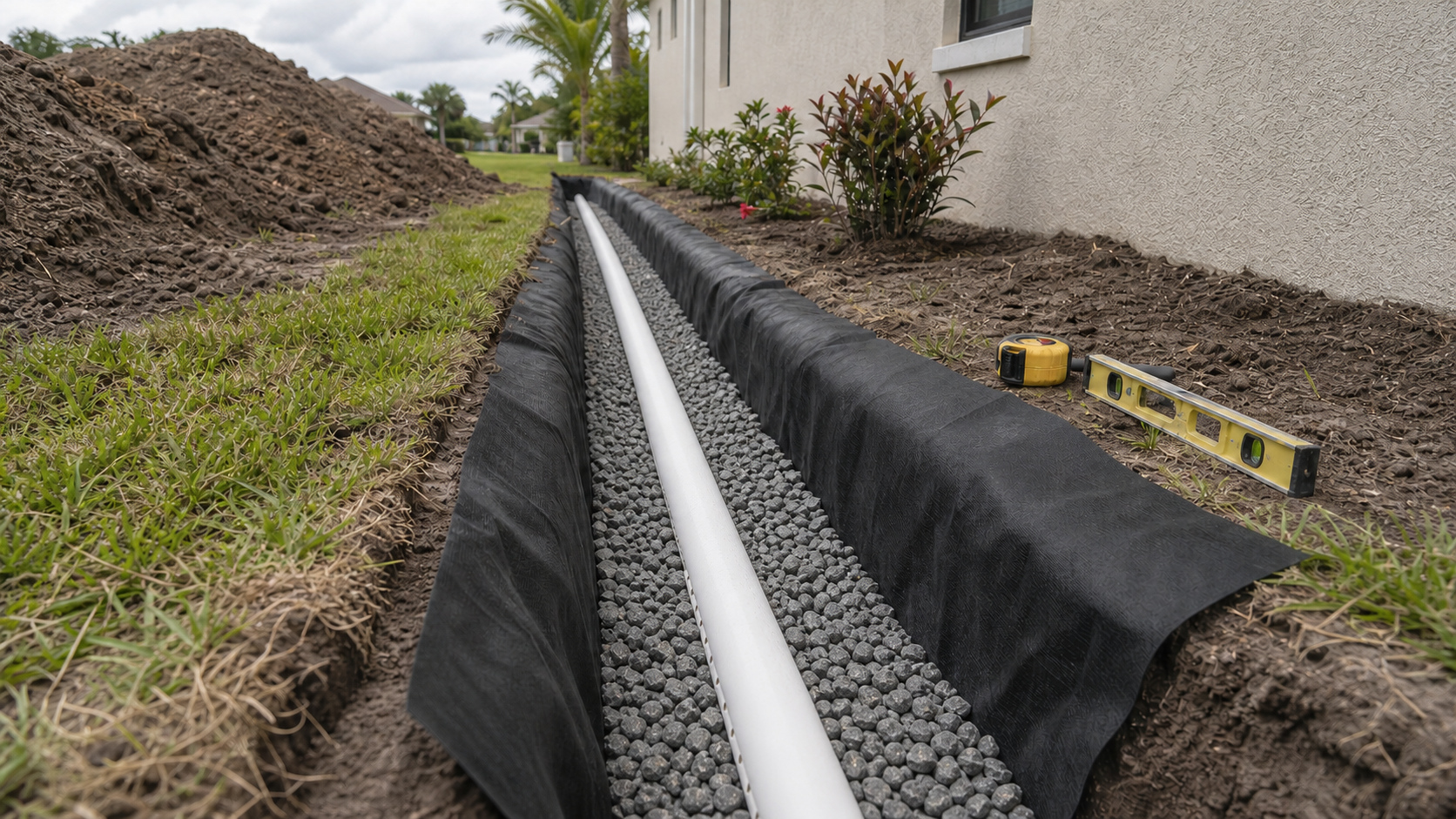
A perforated collection assembly and a solid conveyance line should not be treated as interchangeable. The transition between them, the route, and the outlet all belong in the property-specific scope.
Moves water already collected at a downspout, basin, surface drain, or transition. The scope should identify connections, fittings, cleanouts, route, outlet, and how the line can be serviced.
Collects water through openings only when it is part of a complete subsurface assembly. Stone, filter fabric, trench geometry, transition to solid conveyance, cleanouts, and outlet belong in the same discussion.
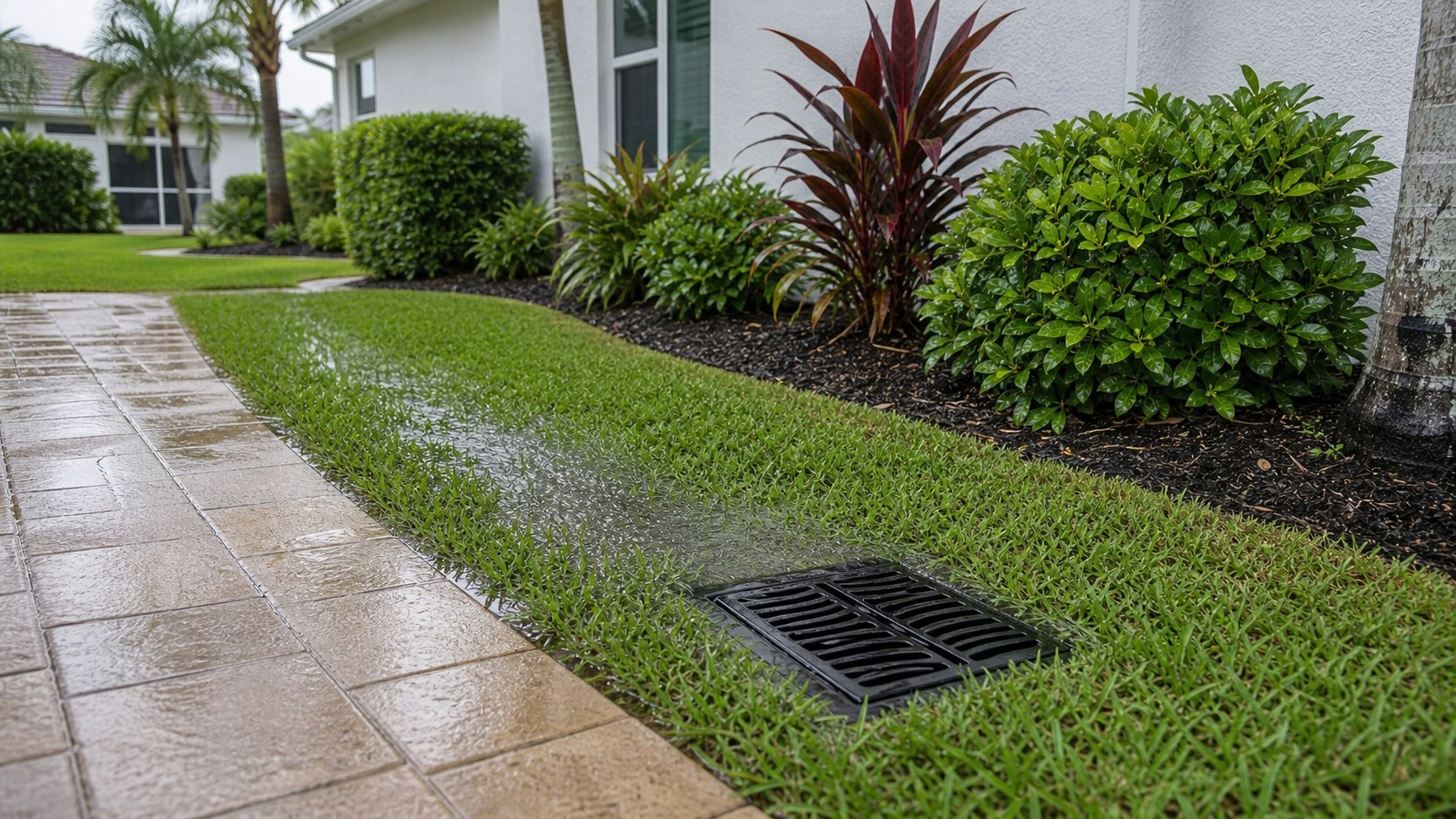
Collects visible surface flow at a defined low point. The grate, sump, outlet fitting, connected pipe, sediment access, surrounding grade, and restoration should be shown together.
Receives concentrated roof runoff through an adapter or inlet. The contributing roof area, debris control, accessible transition, buried route, outlet, and overflow behavior should be reviewed before burial.
Provides inspection, transition, or discharge access. These components should remain locatable and should be specified separately from the buried pipe footage.
Service comparison
The observed failure point and the complete water path should determine the service discussion. These are different scopes with different excavation, testing, and restoration consequences.
Compare a complete source-to-outlet installation when no usable outdoor line exists. The proposal should state every collection component, pipe segment, transition, cleanout, outlet, excavation area, and restoration responsibility.
A route may need to change when the existing alignment, elevation, access, crossing, boundary, or outlet is unworkable. Require the old-line disposition and every new disturbance to be written into the scope.
A separated fitting, crushed section, exposed pipe, settled connection, root conflict, or failed transition may support a narrower repair. Ask how the failure was identified and what remains outside the repaired segment.
Accessible basins, grates, adapters, cleanouts, pipe ends, and outlets may be inspected or cleaned before full replacement is assumed. A weak outlet alone does not identify where the route has failed.
Written installation scope
A clear scope lets you compare what will be installed, what will remain, what may change in the field, and how the property will be restored. It also preserves the location and maintenance information that disappears after burial.
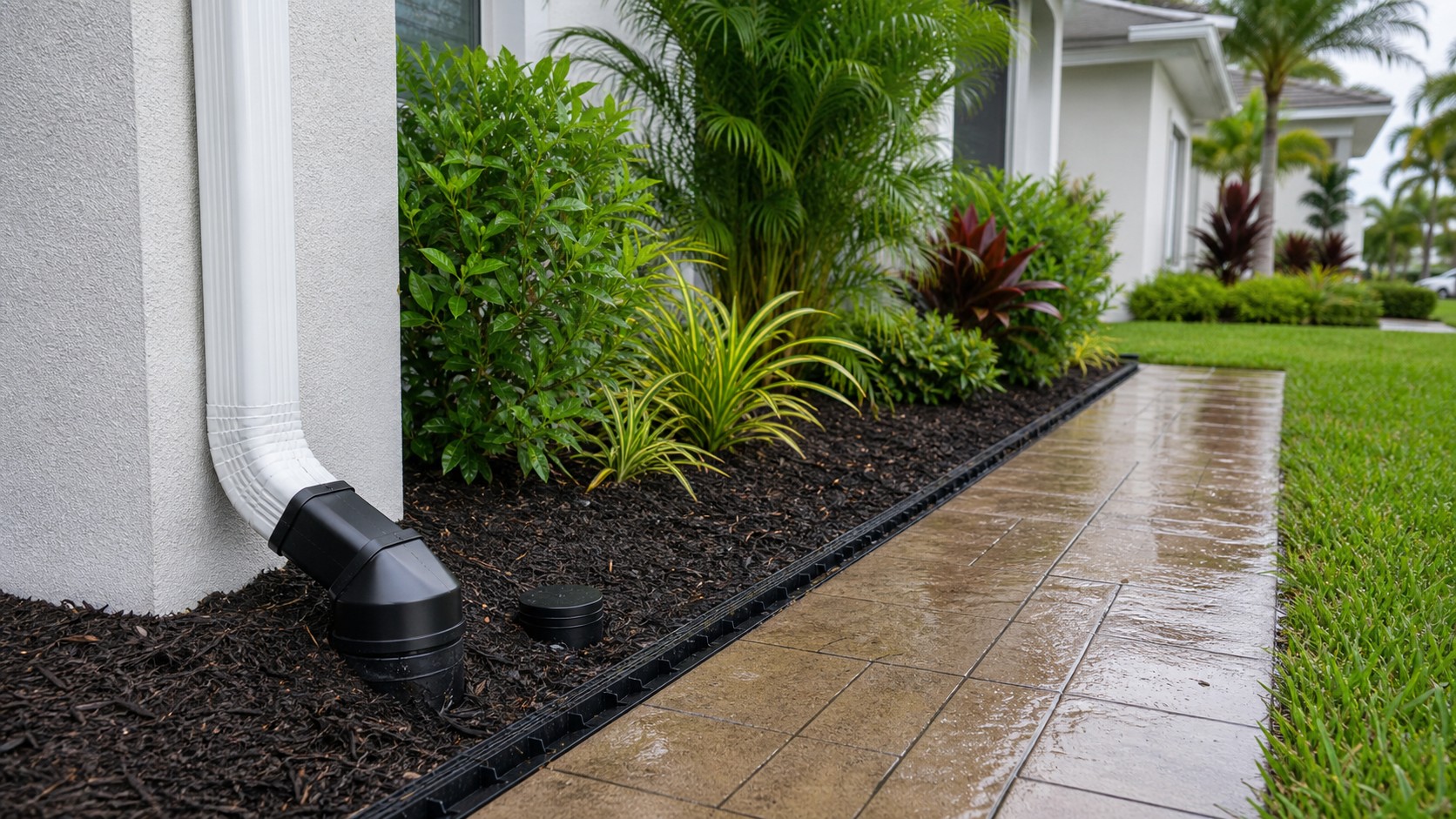
Adapters, basins, cleanouts, junctions, pipe ends, and outlets should remain findable where the design allows. Ask what can be opened, flushed, inspected, or replaced without reopening the entire route.
Cape Coral project checks
These checks keep the private work, public drainage boundary, excavation process, responsible business, and written proposal aligned before the route is opened.
Cape Coral maintains stormwater facilities within the public right-of-way. Clarify whether the request concerns a private inlet and pipe or a public swale, culvert, catch basin, canal, street, or other City feature before authorizing excavation.
Review Cape Coral stormwater guidanceUse the Sunshine 811 process before excavation and identify irrigation and other private facilities separately. Utility marks do not establish the property line, approve the outlet, or select the drainage design.
Review Sunshine 811Ask Cape Coral Permitting Services what applies to the property and proposed work. When state-regulated work is involved, verify the individual license and qualifying business through Florida DBPR rather than relying only on a company name or advertisement.
Review Cape Coral permittingThe City contractor-selection guide recommends detailed written estimates. Compare collection, pipe, route, outlet, excavation, restoration, exclusions, changes, maintenance, schedule, payment, and warranty language before comparing only the total.
Review the City contractor checklistSend the inlet or water source, existing components, route and outlet context, access limits, ZIP code, desired timing, and preferred reply method.
Property-specific confirmation: the on-site review must confirm elevations, component and pipe selection, capacity, utilities, private facilities, property boundaries, outlet authority, restoration, and any applicable permit, licensing, surveying, engineering, or City requirements.
This service page covers buried yard drainage that moves rainwater from downspouts, catch basins, channel drains, French-drain transitions, or other outdoor collection points. Sewer lines, fixture drains, septic piping, and indoor backups require the appropriate plumbing or wastewater channel.
Solid pipe normally conveys water that has already been collected, while perforated pipe may collect through a properly designed subsurface drainage assembly. The written scope should identify what enters each pipe segment and why that material and connection are proposed.
A pipe run is only one part of the system. Document the inlet or connection, fittings and transitions, buried route, cleanouts, outlet, erosion protection, maintenance access, and every public-or-private boundary along the water path.
The route should account for available elevation, foundations, pools, pavers, driveways, irrigation, roots, gates, fences, equipment access, known utilities, neighboring property, and surfaces that must be removed and restored.
Catch-basin sumps, downspout adapters, cleanouts, junctions, emitters, and pipe ends should remain findable where the design allows. Ask how the completed route can be inspected or serviced before a hidden blockage becomes a larger excavation.
Before digging, identify public utilities through Sunshine 811 and private facilities separately. Confirm who controls the proposed outlet and whether a swale, culvert, canal, street, right-of-way, permit, survey, or other City or professional review is involved.
A comparable proposal should state the trench and access limits, spoil and debris handling, bedding or backfill approach, sod and landscape restoration, paver or concrete work, irrigation repair, finish grading, cleanup, exclusions, and how field changes are approved.
Local reference points
These industry and public references help organize visible property conditions and separate private yard drainage questions from stormwater, right-of-way, utility-marking, and seasonal rainfall context.
Questions
No. A French drain is a subsurface collection assembly that commonly includes stone, filter fabric, and perforated pipe. Solid yard drain pipe usually conveys water already collected by a basin, surface drain, downspout, or another inlet.
A buried downspout route may be considered when the source, connection, cleanout access, pipe path, outlet, property boundary, and local requirements are confirmed for the site.
Sometimes. An accessible obstruction, separated fitting, damaged segment, poor transition, or blocked outlet can lead to a narrower service discussion. Settlement, widespread damage, an unworkable route, or an unsuitable outlet may require rerouting or replacement.
Not automatically. The proposal should state the basin, grate, sump, outlet fitting, connected pipe, cleanouts, discharge point, excavation, and restoration as separate scope components.
The outlet must be confirmed for the property and proposed work. Do not assume that a swale, culvert, canal, street, right-of-way, neighboring lot, or existing pipe can be used without the applicable ownership, City, permit, utility, survey, or professional review.
Ask for the observed water source, collection point, pipe material and route, fittings, transitions, cleanouts, outlet, excavation, utility process, access, restoration, maintenance instructions, exclusions, schedule, change process, and applicable permit responsibility in writing.
Share photos after rain, the affected area, likely source, visible basins or pipe ends, how long water remains, possible route and outlet areas, ZIP code, gate width, hardscape, irrigation, roots, utilities, prior work, and the result you need.
Related services
Related resources
Next step