Start with the service need
A contractor visit may involve planning a new French drain, evaluating an existing system, cleaning reachable components, tracing a buried route, repairing a failed section, improving service access, or reviewing replacement. Describe the observed water problem before choosing the scope.
Plan a new installation from source to outlet
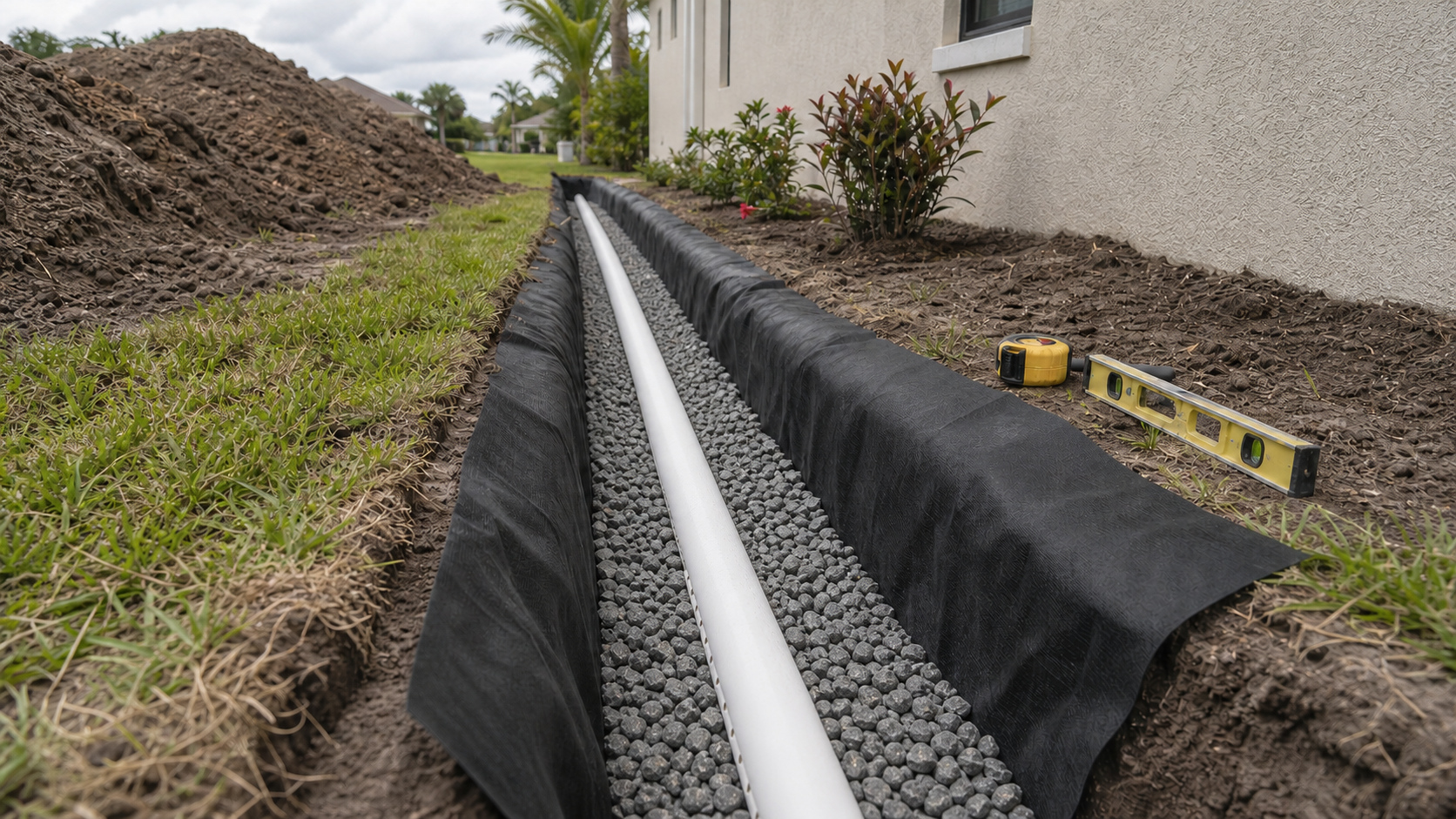
A new French drain scope should connect the water source and collection area to a workable trench route, pipe and aggregate assembly, discharge point, cleanouts or observation access, utility marking, excavation limits, and surface restoration.
Separate cleaning and inspection from repair
Cleaning may address debris at accessible grates, basins, cleanouts, pipe runs, or outlets. A settled trench, crushed pipe, root intrusion, failed fabric, clogged gravel, poor slope, or unusable discharge route may require tracing, targeted repair, rerouting, or replacement review.
Identify every visible component
Photograph visible inlets, catch basins, cleanouts, pipe ends, pop-up emitters, and outlets. If the route or outlet is unknown, say so instead of assuming the buried system can be serviced or replaced from one opening.
Ask what the contractor will verify
A useful visit should distinguish the water source, collection point, route, restriction, outlet, and maintenance path before a cleaning method or replacement scope is recommended.
Prepare a useful service request
Share the property type, approximate drain age, recent rain pattern, access limitations, visible components, prior maintenance, and Cape Coral ZIP code, commonly 33904, 33909, 33914, 33990, 33991, or 33993. Note whether water is approaching the home, pool deck, driveway, or neighboring property.
Compare the written estimate
The estimate should identify the diagnosed source, installation or service access, included trench and pipe work, outlet work, restoration, exclusions, utility marking, change approval, schedule, maintenance access, and why the proposed scope fits the observed water path.
Review site constraints
Roots, irrigation, buried utilities, pavers, pool equipment, swales, canals, property boundaries, driveway edges, and right-of-way areas can change access and may require City, utility, or professional guidance before work starts.