Driveway or garage threshold
Trace the sheet-flow line, driveway crown or low edge, garage approach, nearby downspouts, traffic context, available route, and outlet before locating a channel.
 Cape Coral Drainage GuideCape Coral yard drainage requests
Cape Coral catch basin and channel drain service
Request catch-basin installation or channel-drain service for runoff collecting in private low areas or crossing driveways, patios, pavers, walkways, and garage thresholds in Cape Coral.
Cape Coral drainage requests. Tell us where water collects, what appears to feed it, and how you prefer to be contacted. We review every request and follow up with clear next steps.
Problem
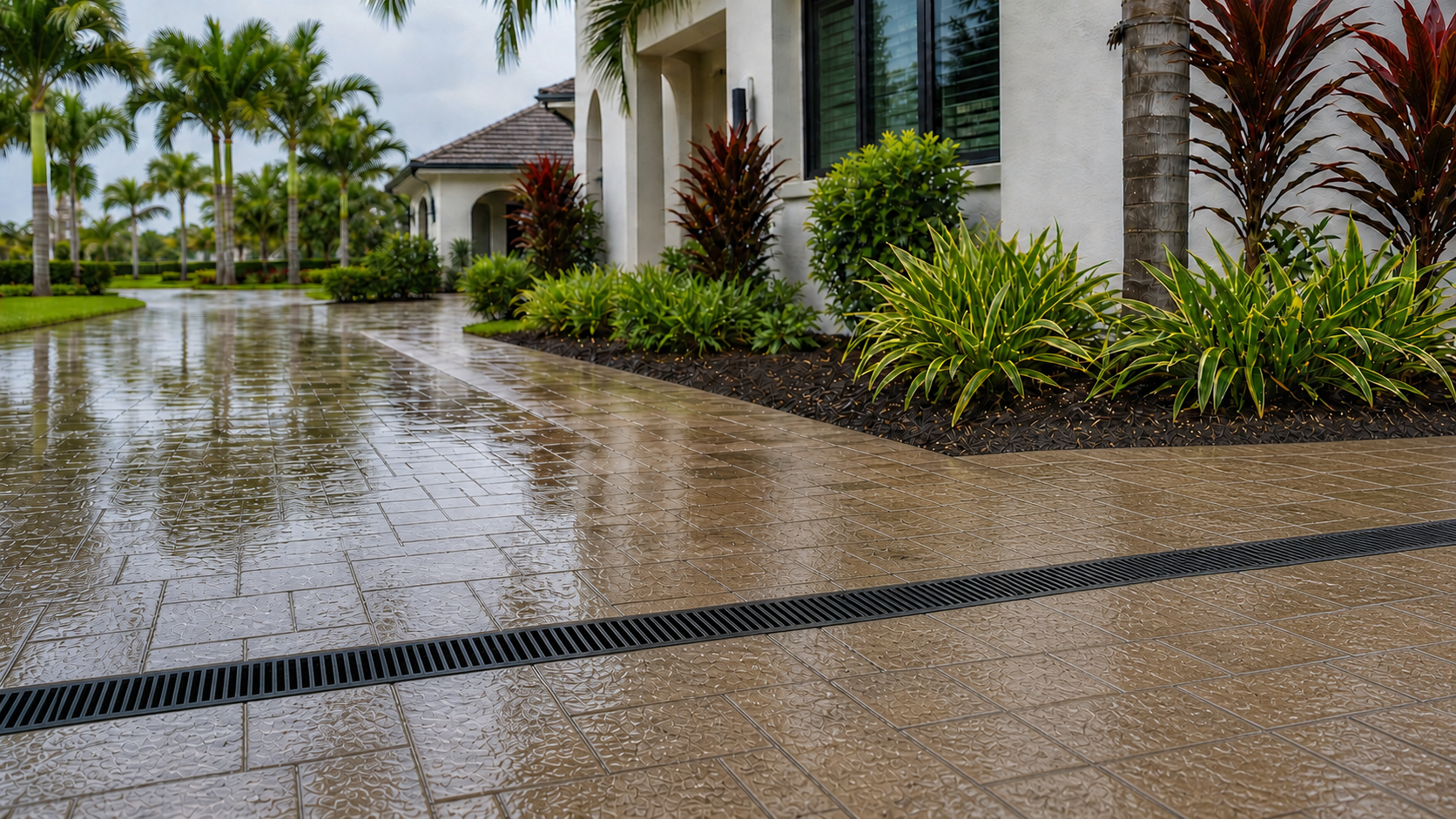
Surface water may cross hardscape as a broad line, converge at one low point, or overwhelm an existing grate. A useful installation scope follows that water from its source through the inlet and connected pipe to a maintainable outlet.
Complete surface-drain scope
A channel drain or catch basin is the visible inlet. A useful Cape Coral surface-drain installation scope should connect that inlet to the full private-property water path, from the repeatable source through collection and conveyance to an appropriate outlet and future cleaning access.
Record whether runoff follows rainfall, a roof edge or downspout, irrigation, adjacent hardscape, a grade change, or an existing drain that overflows.
Match the observed path to line interception across hardscape, point collection at a low area, grading correction, or a combined collection plan.
Identify the outlet connection from the channel or basin, solid conveyance pipe, fittings, turns, cleanouts, crossings, access limits, and conflicts.
Name the proposed outlet and confirm who controls it, whether it is maintainable, and whether a swale, culvert, street, canal, right-of-way, or neighboring property is involved.
State how pavers, concrete, turf, beds, irrigation, excess soil, debris, grate access, basin cleanout, and final component locations will be handled.
Scope rule: an isolated grate or basin description is incomplete when it does not identify the connected route, outlet, restoration, and maintenance path.
Match collection to the flow shape
Channel drains intercept a visible band of runoff where water crosses a driveway, patio, paver field, walkway, courtyard, or threshold edge. Their surrounding surface, grate, connected pipe, access, and outlet all matter.
Private catch basins and area drains receive water at one low point where surrounding surface flow converges. The basin location should follow observed grades and runoff rather than being treated as a substitute for understanding a broad wet area.
One property can need more than one collection method, but every added inlet increases the importance of tracing the connected route, cleaning access, and outlet as a single system.
Compare point and line collection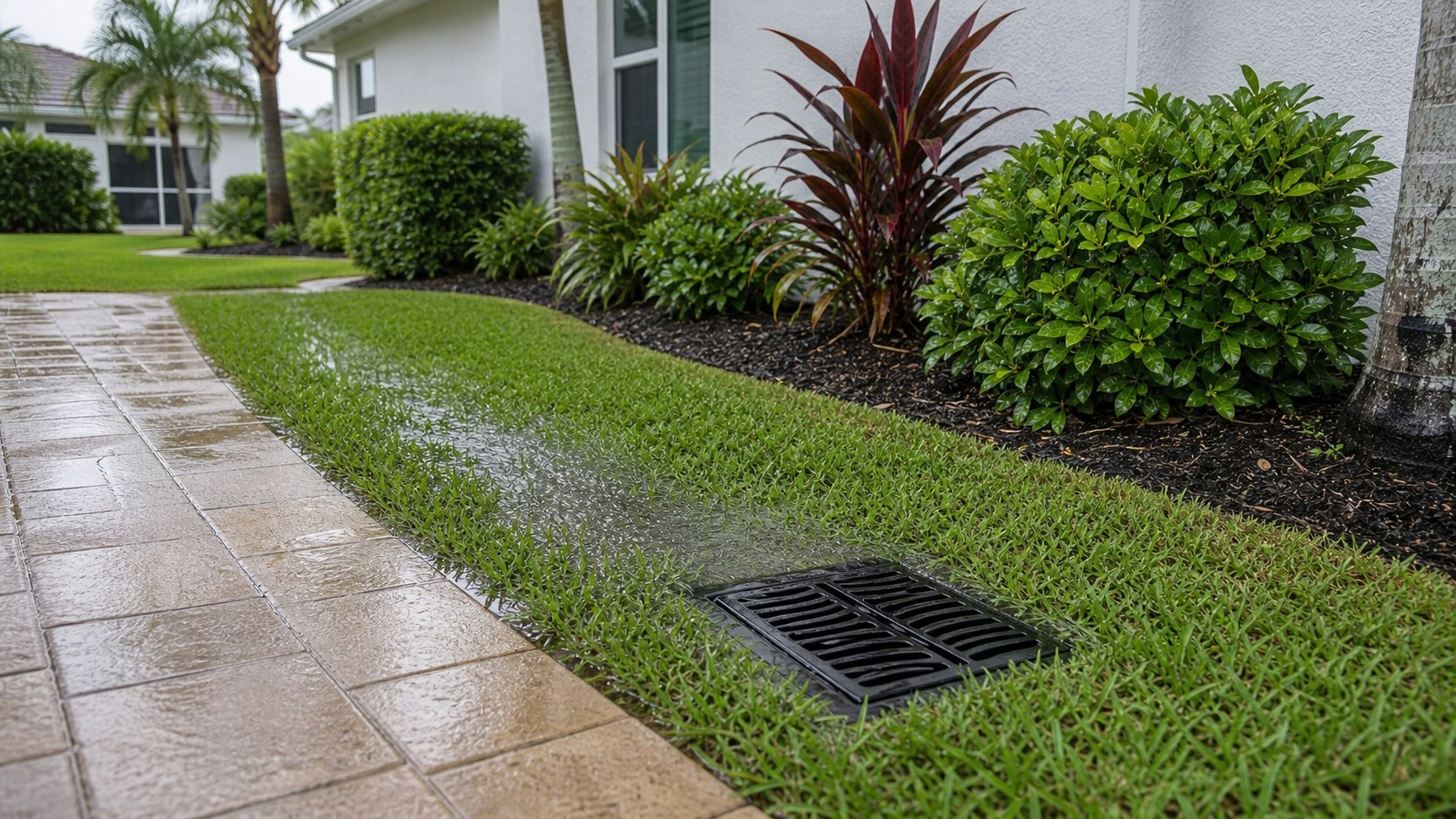
Written installation anatomy
Use these categories to compare what is included, excluded, assumed, or still unknown. They organize a property-specific proposal without prescribing dimensions, capacity, materials, or an outlet.
Send the affected area, flow shape, visible drainage, possible route and outlet, access limits, Cape Coral ZIP code, desired timing, and reply preference. The channel-drain or catch-basin category is already selected.
Property contexts
The same drain name can describe very different property conditions. Start with the observed surface and water path before discussing component selection or placement.
Trace the sheet-flow line, driveway crown or low edge, garage approach, nearby downspouts, traffic context, available route, and outlet before locating a channel.
Document surface slope, joints and edges, landscape washout, nearby roof runoff, low transitions, pedestrian use, restoration limits, and where collected water could go.
Confirm that runoff actually converges at one point before treating a basin as the answer. Broad soggy soil, irrigation, or subsurface water can require a different conversation.
Start with the grate or basin, then trace every visible connection, cleanout, pipe end, overflow point, and outlet. Cleaning, localized repair, rerouting, or replacement may differ from new installation.
Prepare the property visit
Clear evidence helps separate cleaning, repair, replacement, new installation, public stormwater reporting, and a different drainage approach before anyone assumes the solution.
Cape Coral and excavation boundary
The City Stormwater Division maintains swales, drainage pipes, catch basins, canals, and related facilities within the public right-of-way. Report a clogged, damaged, or sunken public catch basin through the City's 311 catch-basin path and include the exact address or nearest intersection.
For private excavation, Sunshine 811 requires advance utility notification and notes that private facilities can need separate identification. The property-specific scope should also confirm irrigation, boundaries, the outlet, applicable permits, regulated credentials when relevant, and any work affecting a public feature before digging begins.
Property-specific confirmation: this page does not diagnose the site, select or size a drain, establish elevations or boundaries, approve an outlet, or decide permit, licensing, surveying, engineering, utility, or City requirements for a proposed scope.
Cape Coral surface-drain service request
Send the observed flow path, affected surface, existing drainage, possible route and outlet, Cape Coral ZIP code, desired timing, and preferred reply method without leaving this page.
Evaluation
Observed runoff source, flow direction, hardscape elevations, low points, and the collection geometry.
Channel or basin location, grate and load context, connected pipe route, transitions, cleanouts, and access constraints.
A suitable outlet, erosion and neighboring-property concerns, and the boundary between private work and City stormwater infrastructure.
Utility and irrigation conflicts, excavation and hardscape restoration, debris access, maintenance responsibilities, and applicable permit or credential checks.
Cost depends on property layout, drainage path, materials, trenching requirements, discharge location, and site conditions.
Local reference points
These industry and public references help organize visible property conditions and separate private yard drainage questions from stormwater, right-of-way, utility-marking, and seasonal rainfall context.
Related services
Useful resources
Questions
A channel drain collects along a line where surface water crosses hardscape. A private catch basin or area drain collects at a point where surrounding runoff converges. Either inlet still needs a connected route, outlet, and cleaning access.
Common review areas include driveways, garage thresholds, patios, paver fields, courtyards, pool-deck edges, walkways, and other hardscape transitions where water crosses a defined line.
The written scope should identify the water source, collection location, grate or basin, connected pipe and fittings, cleanouts, route, outlet, excavation limits, hardscape or landscape restoration, maintenance access, and important exclusions.
A basin is an inlet, not a complete drainage system. The property review still needs to confirm why water reaches the low point, how collected water will move, where it can discharge, and how the basin and outlet will be maintained.
Yes. Leaves, mulch, sand, sediment, and other debris can cover grates or collect inside channels and basin sumps. Removable grates, accessible cleanouts, connected pipe, and an inspectable outlet should be addressed in the scope.
Cape Coral directs clogged, damaged, or sunken City catch-basin reports to 311. Include the exact address or nearest intersection. Use the private service request for drainage features and water problems inside the property boundary.
Sunshine 811 says anyone planning to dig must notify at least two full business days before excavation. Member utilities mark facilities they own; irrigation and other private lines may need separate identification.
Request help