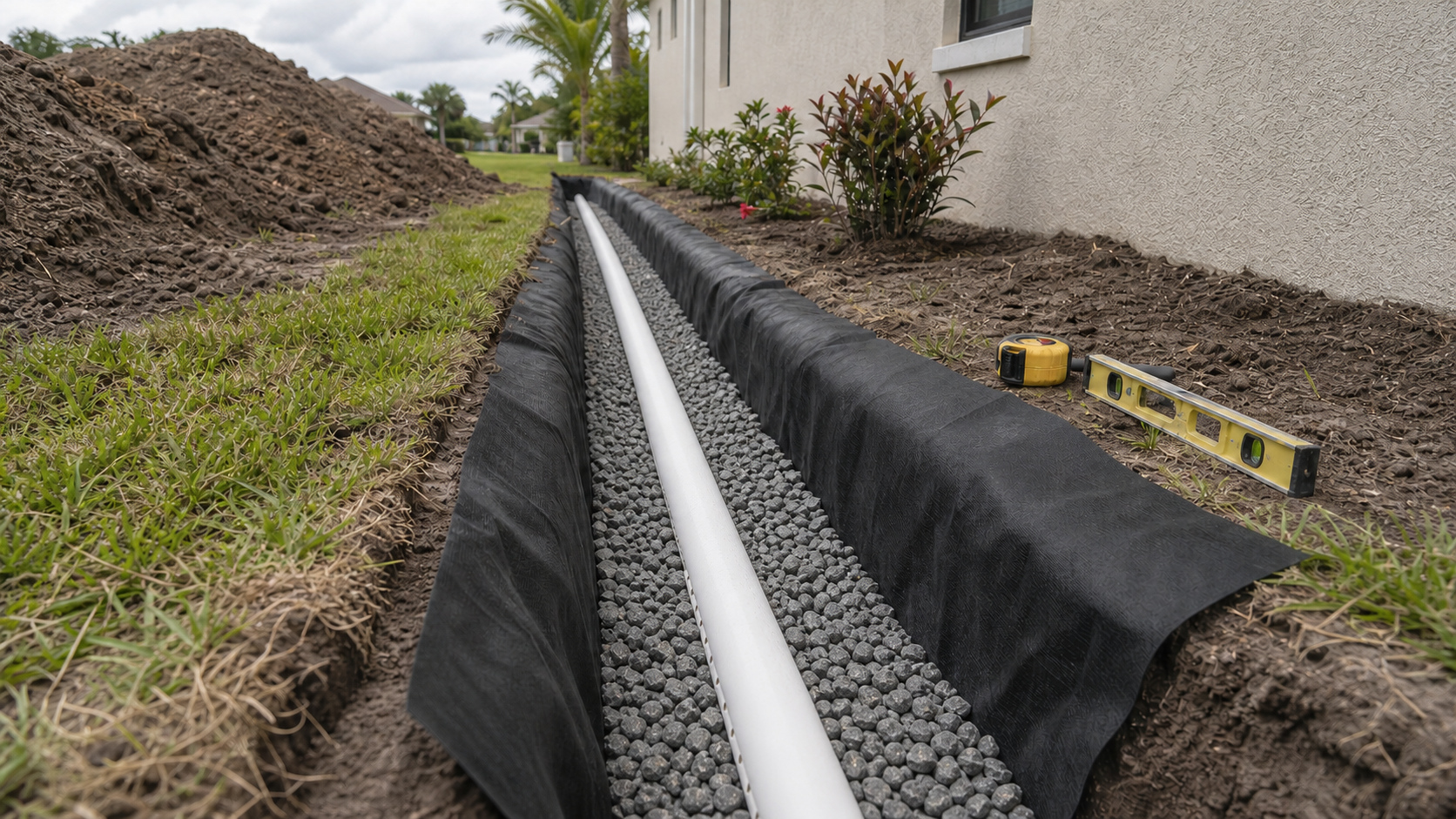
Stone and geotextile envelope
Note exposed filter fabric, silt or fine-soil staining, displaced aggregate, surface settlement over the trench, washout, or sections where the stone bed appears buried by landscape material.
Cape Coral French drain repair service
Request service for a French drain that backs up, drains slowly, leaves the same area wet, or no longer reaches a workable outlet. A useful repair visit traces the water source, every visible access point, the buried route, and the discharge before separating cleaning, targeted repair, rerouting, or replacement.
Cape Coral drainage requests. Tell us where water collects, what appears to feed it, and how you prefer to be contacted. We review every request and follow up with clear next steps.

Cape Coral French drain repair request
Send the repeat water pattern, visible access points, prior cleaning or repair, Cape Coral ZIP code, and preferred reply method without leaving this page.
Source-to-outlet repair review
A French drain repair visit should follow the whole water path. The visible backup may be the collection point, while the actual restriction or failure is farther along the buried route or at the outlet.
Identify rain, roof runoff, irrigation, hardscape flow, or an uphill area feeding the recurring wet zone.
Check the trench surface, inlet, basin, grate, downspout connection, and the exact point where water first backs up.
Trace pipe, stone trench, cleanouts, fittings, roots, settlement, prior excavation, and reachable service points.
Find where the system should discharge, whether flow reaches it, and whether the outlet is usable and authorized.
Define access, excavation, backfill, grade, sod, irrigation, paver, concrete, cleanup, and future maintenance access.
Keep the diagnosis property-specific. This framework organizes observations and the first service scope. It does not identify the failed component, approve an outlet, determine a property boundary, or prescribe construction from a webpage.
French drain component evidence
These details can help distinguish an accessible component problem from a wider buried-trench concern. Record only what is visible or known; excavation and testing belong in the property-specific service scope.
Note exposed filter fabric, silt or fine-soil staining, displaced aggregate, surface settlement over the trench, washout, or sections where the stone bed appears buried by landscape material.
Share any known change from perforated collection pipe to solid conveyance pipe, plus visible couplings, adapters, crushed ends, separated joints, corrugated sections, rigid sections, or root entry near a connection.
Photograph each grate, catch basin, downspout adapter, observation riser, cleanout cap, end cap, or other reachable opening. Include sediment depth and whether water rises at one access point before another.
Record a daylighted pipe end, pop-up emitter, outlet guard, erosion, staining, backwater, standing water around the discharge, or no visible outlet at all. Do not alter a public or unidentified feature while documenting the outlet.
Include installation records, approximate age, prior flushing, repaired segments, tree growth, fence posts, irrigation changes, paver work, pool construction, utility work, or excavation that may have crossed the trench alignment.
Ask which inlet, cleanout, riser, basin, or outlet will remain reachable for future observation and service. A buried repair without identifiable access can make the next slowdown harder to isolate.
Written repair scope
Use the written scope to see what will be inspected, opened, tested, repaired, restored, and documented before comparing the total.
Send the Cape Coral ZIP code, rain pattern, visible access points, outlet condition, prior work, affected surfaces, and access limits. French drain service is already selected.
Note where water returns, how long the area remains wet, whether an inlet or basin overflows, whether the trench line feels saturated, and whether visible outlet flow is weaker than before. Record what changed after landscaping, irrigation, roof, paver, pool, grading, or prior drain work.
Locate visible grates, basins, downspout connections, cleanouts, inspection ports, pipe ends, pop-up emitters, and outlets. A service visit is more useful when each reachable point can be opened, traced, or tested instead of treating the wet area as the only clue.
A French drain works as a connected source, collection trench or inlet, buried route, transition, and outlet. A restriction, damaged connection, settled segment, root conflict, undersized collection area, or discharge limit anywhere along that path can recreate the same surface symptom.
Leaves, mulch, sediment, roots, or debris at a reachable grate, basin, cleanout, or outlet may support a cleaning scope. Crushed or separated pipe, failed connections, settlement, missing access, damaged collection points, or an isolated trench failure can require targeted repair.
Widespread fabric or stone contamination, an unworkable slope, a buried route that cannot be accessed, recurring failure after prior work, or an outlet that cannot accept the route may lead to rerouting or replacement rather than another localized cleaning or patch.
Do not assume a roadside swale, culvert, canal, street, right-of-way, neighboring lot, public catch basin, or unidentified pipe is an authorized outlet. The property-specific scope may require City guidance, utility marking, boundary confirmation, permitting, or qualified professional review.
Ask the proposal to identify the observed failure, diagnostic or cleaning work, components opened or replaced, route and outlet work, excavation, access, utility process, debris handling, restoration, exclusions, schedule, change approval, and maintenance instructions.
The written scope should address backfill, finish grading, sod, landscape beds, irrigation, pavers, concrete, cleanup, and future access to the inlet, cleanout, and outlet. A repaired system is easier to maintain when its service points remain identifiable and reachable.
Local reference points
These industry and public references help organize visible property conditions and separate private yard drainage questions from stormwater, right-of-way, utility-marking, and seasonal rainfall context.
Questions
Sometimes. A reachable blockage, damaged inlet, separated fitting, isolated pipe segment, access point, or outlet problem may support a narrower scope when the remaining trench, route, and discharge still work. The property visit should establish how much of the system is affected.
Cleaning may be a useful first conversation when debris or roots are visible at a reachable inlet, basin, cleanout, connected pipe, or outlet and the route previously moved water. Ask how flow will be checked after cleaning and what evidence would trigger a repair review.
The restriction may be farther along the route, or the issue may involve settlement, damaged pipe, contaminated stone or fabric, collection limits, slope, source changes, or an outlet that cannot receive the flow. Repeat symptoms need the complete water path reviewed.
A reliable repair price depends on the failure, access, route, excavation, affected components, outlet, utilities, restoration, and whether cleaning, targeted repair, rerouting, or replacement is required. Request a written property-specific scope instead of relying on an unsupported generic range.
Share the Cape Coral ZIP code, photos during or after rain, where water starts and remains, how long it lasts, every visible inlet, basin, cleanout and outlet, approximate system age, recent site changes, prior cleaning or repair, and access constraints.
No. This page concerns private outdoor runoff drainage. Indoor fixtures, sanitary sewer backups, and building plumbing need the appropriate plumbing channel. Describe the location and symptoms clearly so the first follow-up starts with the right scope.
Related services
Related resources
Next step