Source correction, irrigation review, grading, a subsurface collection discussion, or a combined route.
Cape Coral drainage systems service
Cape Coral Drainage Systems: Compare Yard Drain Types
A drainage system is more than a product name. It is a chain from water source to collection point, route, outlet, and maintenance access. Compare system roles by how water behaves before discussing French drains, catch basins, channel drains, downspout piping, grading, or a combined approach.
Cape Coral drainage requests. Tell us where water collects, what appears to feed it, and how you prefer to be contacted. We review every request and follow up with clear next steps.
Water-pattern navigator
Start With How Water Behaves, Not a Product Name
Choose the closest observed pattern to compare the drainage conversations, evidence, and boundary question that belong at the beginning of a property review.
Private comparison: no selection is sent, retained, or added to analytics. This navigator organizes questions; it does not diagnose a property, select a system, size components, or approve an outlet.
Cape Coral drainage system request
Request a Cape Coral Drainage System Review
Send the observed water pattern, affected area, systems being compared, possible route and outlet, Cape Coral ZIP code, desired timing, and preferred reply method without leaving this page.
- Describe how water behaves.Note soft soil, one low point, hardscape runoff, roof discharge, an existing drain problem, or water near a swale or street feature.
- List the options being compared.Include any French drain, catch basin, channel drain, downspout route, buried pipe, grading, swale, source correction, or combined-system question.
- Trace the complete path.Describe the collection area, possible route and outlet, visible components, pavers, landscaping, irrigation, roots, utilities, access limits, public boundaries, and prior work.
Prefer to speak with someone?
Call (941) 681-8056
Calls are not recorded.
Read the water pattern first
Soft ground, one isolated low point, water crossing a hardscape line, concentrated roof runoff, an existing blocked system, and a swale or street concern are different starting patterns. The system conversation should follow the observed pattern.
Choose the collection geometry
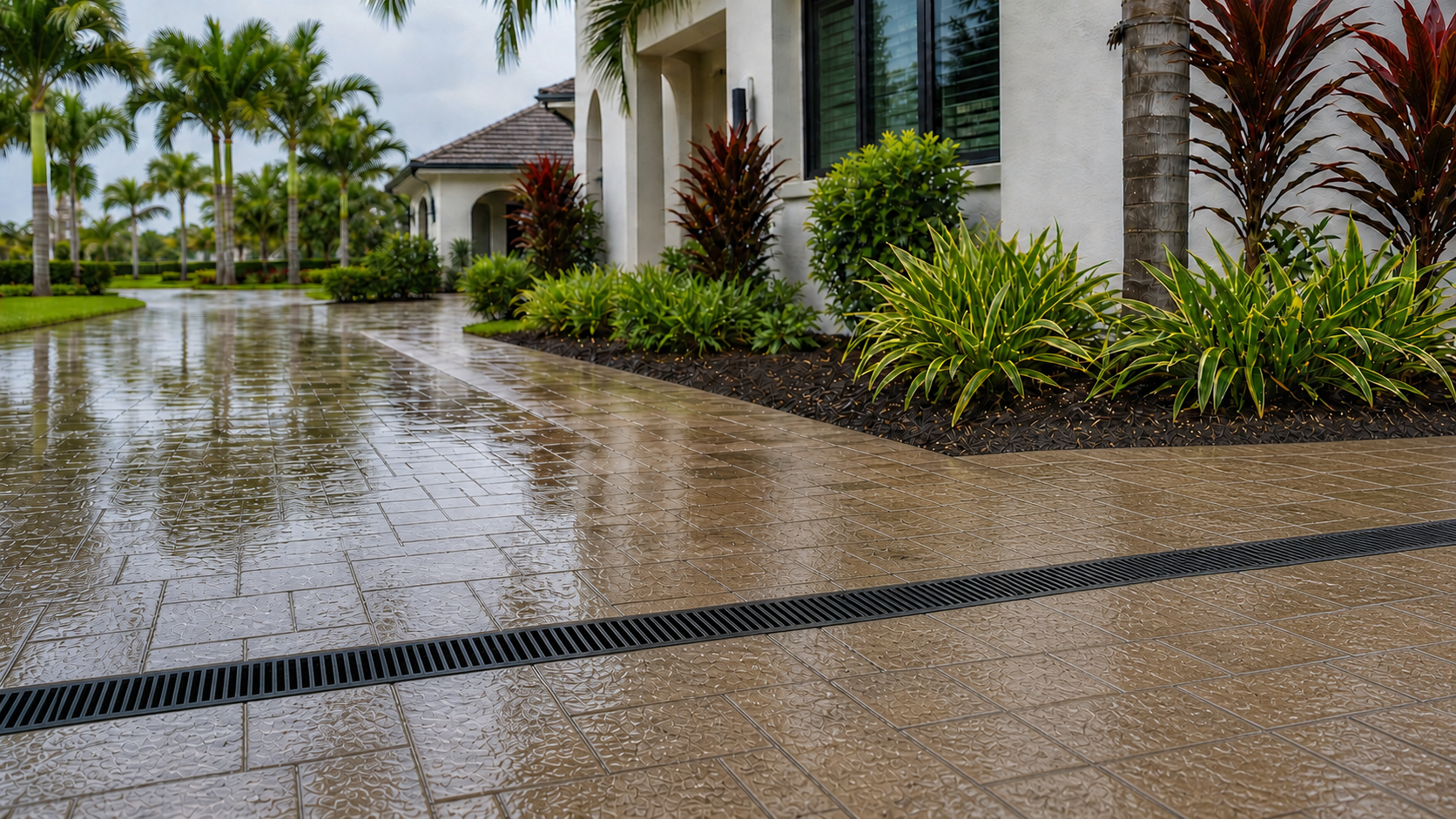
A French-drain trench collects along a subsurface zone, a catch basin collects at a point, and a channel drain intercepts water along a line. Downspout piping begins at a roof-water connection, while grading changes how water moves across the surface.
Treat conveyance as its own decision
Collection does not answer where water goes next. Document the pipe or surface route, elevation changes, pavers, landscaping, irrigation, roots, utilities, fences, and access limits before discussing an outlet.
Confirm a lawful, workable outlet
A drainage conversation should identify the proposed discharge area and distinguish private-lot work from neighboring-property, swale, culvert, canal, street, and right-of-way boundaries. City or professional review may be the correct next step.
Design the maintenance path before installation
Grates, basins, cleanouts, pipe ends, and outlets should remain findable and serviceable. Ask what can be opened, inspected, flushed, or cleaned and who is expected to maintain each access point.
Compare the complete chain
Two systems with the same product label can perform differently because the inlet, route, outlet, maintenance access, restoration, and exclusions are different. Compare the full chain, not only the drain name.
Local reference points
Useful Sources for This Drainage Topic
These industry and public references help organize visible property conditions and separate private yard drainage questions from stormwater, right-of-way, utility-marking, and seasonal rainfall context.
Questions
Drainage FAQs
How do I compare drainage systems for a Cape Coral yard?
Start with how water behaves, then compare collection geometry, route, outlet, maintenance access, restoration, and public-or-private boundaries. Product names alone do not establish fit.
What is the difference between point, line, and subsurface collection?
A catch basin collects at a point, a channel drain intercepts water along a line, and a French-drain trench gathers water through a subsurface zone. Each still needs a workable route and outlet.
Is a French drain always the best yard drainage system?
No. Soggy soil may lead to a French-drain discussion, while visible low-point water, hardscape runoff, roof runoff, blocked existing drains, or public stormwater concerns can require different conversations.
Why do the route and outlet matter as much as the drain type?
A collection feature cannot move water away by itself. The connected route, elevation, discharge area, maintenance access, utility conflicts, and property boundaries determine whether the complete concept is workable.
What should be documented before comparing systems?
Record the rain timing, water source, collection pattern, duration, possible route, possible outlet, existing drains, hardscape, irrigation, utilities, swales, and access constraints.
Related services
Service Pages Connected to This Topic
Related resources
Keep Comparing the Drainage Issue
Next step