After-rain photos
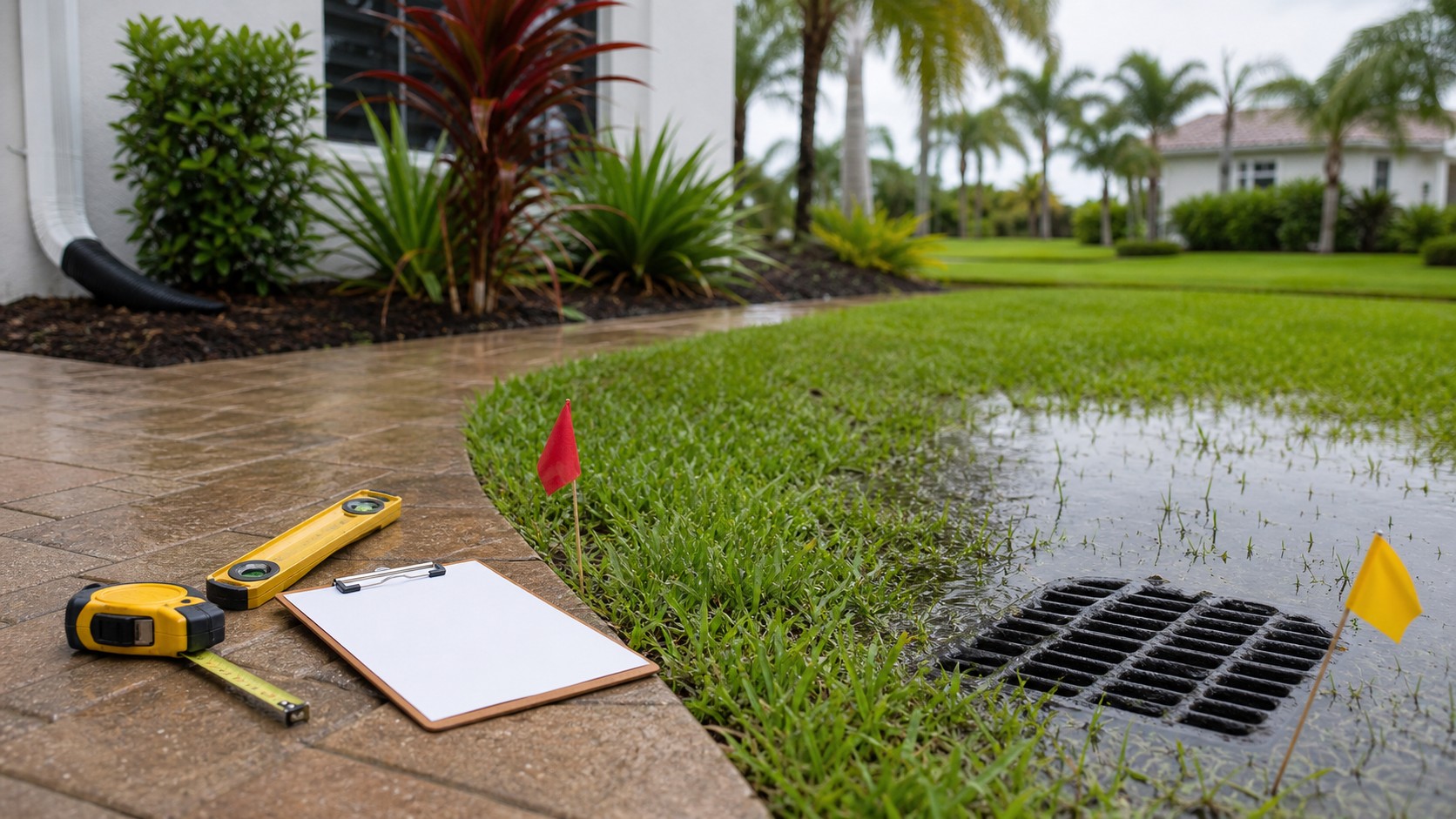
Photograph the wet area soon after the rain and again later if water remains. Include enough surrounding context to show the yard, house, driveway, swale, or patio relationship.
 Cape Coral Drainage GuideCape Coral yard drainage requests
Cape Coral drainage education
Good photos and a short water-timing record can make a drainage conversation more specific. Build a private browser-only summary of where water starts, where it collects, how long it remains, and what may affect the route.
Cape Coral drainage requests. Tell us where water collects, what appears to feed it, and how you prefer to be contacted. We review every request and follow up with clear next steps.
Private planning tool
Organize the water location, timing, visible sources, and photo needs before calling a drainage provider or reporting a public stormwater concern.
This tool works in your browser. Entries are not transmitted, retained, or added to the site analytics event log.
Observation summary
This summary is preparation evidence, not a drainage diagnosis, design, permit decision, survey, engineering opinion, or contractor estimate.
Photograph the wet area soon after the rain and again later if water remains. Include enough surrounding context to show the yard, house, driveway, swale, or patio relationship.
Include downspouts, gutter outlets, hardscape edges, irrigation heads, roof valleys, neighboring runoff paths, or areas where water enters the problem spot.
Show possible outlet areas, side-yard access, fences, pavers, trees, utilities, irrigation valves, swales, street edges, and any existing drains or catch basins.
Avoid sending sensitive personal documents, financial information, children, license plates, security-system details, or unrelated private information in drainage photos.
Local reference points
These industry and public references help organize visible property conditions and separate private yard drainage questions from stormwater, right-of-way, utility-marking, and seasonal rainfall context.
Questions
Photos can help frame the conversation, but they do not prove slope, utility conflicts, discharge rights, permit requirements, or the final scope.
A small set is usually better than dozens: one wide photo, one close photo, one source photo, one route photo, and one outlet or swale/context photo.
Related services
Related resources
Next step