Where water starts, collects, and can legally discharge.
Cape Coral drainage service
Yard Drainage Services in Cape Coral
Get help with Cape Coral yard drainage for standing water, soggy lawns, landscape washout, runoff, low spots, and practical drainage options for your property.
Cape Coral drainage requests. Tell us where water collects, what appears to feed it, and how you prefer to be contacted. We review every request and follow up with clear next steps.
Problem
What This Service Helps Sort Out
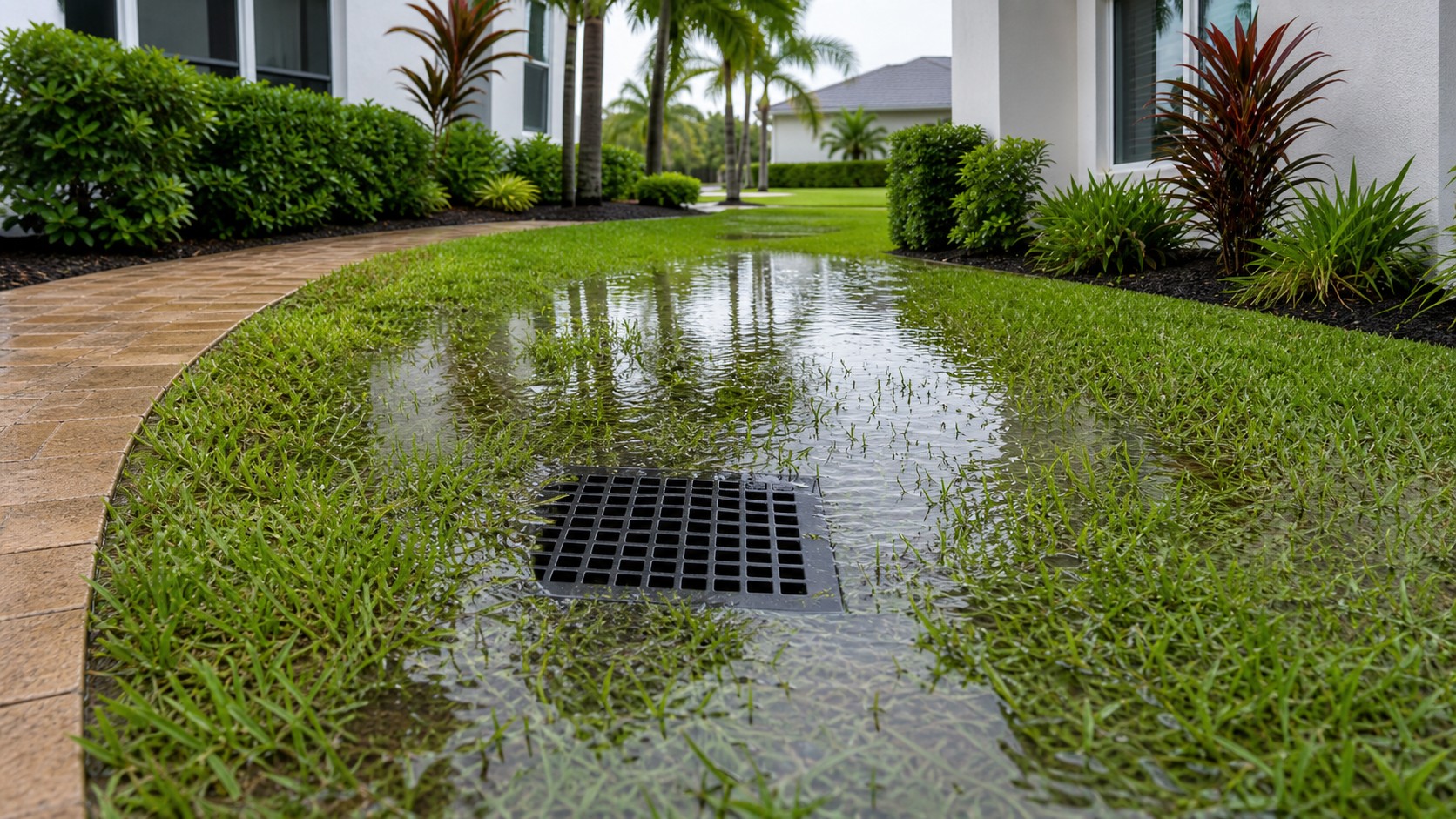
Yard and landscape drainage problems often show up as puddles after rain, soft turf, mulch washout, water collecting near patios, or runoff crossing areas where people walk or park.
When it may help
- Water sits in the same low area after typical storms.
- Downspout runoff is soaking turf or beds.
- Water crosses a walkway, patio, or driveway.
- Mulch, soil, or landscape beds wash out after rain.
- The yard stays too wet to use after rain.
Private roof-runoff estimator
Estimate How Much Rain Reaches a Cape Coral Yard
Use the roof footprint and measured rain depth to estimate the gross volume of water leaving the roof during one rain event. This helps document whether concentrated roof runoff lines up with a recurring wet area.
Estimated gross roof runoff
1,246 gallons
2,000 sq ft x 1 in x 0.623 = 1,246 gallons
Example values are shown. Adjust the measurements to estimate one rain event.
Transparent method. The EPA rainwater collection method uses 0.623 gallons per square foot per inch. This calculator shows gross volume before splash, wind, gutter overflow, and other collection losses.
Planning boundary. This estimate does not size gutters, downspouts, pipes, drains, storage, pumps, infiltration systems, or outlets. A property-specific review still needs to consider slope, soil, route, discharge, utilities, public stormwater features, and applicable requirements.
Privacy. Measurements stay in this browser and are not transmitted, retained, or added to the site analytics event log.
Water-pattern triage
Match the Yard Drainage Pattern to the Next Question
These observations do not diagnose a property. They help a Cape Coral homeowner document the water source, collection point, route, and public-or-private boundary before contacting a provider.
Water starts below a downspout
Document the roof-water source, where it lands, the low area it reaches, and whether a practical route and outlet exist before discussing buried pipe or another fix.
Review downspout routingWater crosses a driveway, patio, or walkway
Trace the sheet-flow direction and lowest hardscape edge. A surface collection point only helps when the connected pipe route, outlet, and cleaning access also make sense.
Compare surface drainsA lawn or side yard stays soft after rain
Record how long the area stays wet, nearby grade changes, irrigation, roof runoff, and possible outlets. A French drain may be one option, but the water source and route come first.
Review French drain fitThe issue reaches a swale, culvert, or street inlet
Separate private-lot observations from public stormwater features before hiring anyone. City review may be the correct starting point when the concern involves right-of-way drainage.
Check the public boundary
Planning boundary: recurring drainage problems still need property-specific review for slope, soil, utilities, discharge, neighboring property, public stormwater features, and applicable requirements.
Cape Coral yard drainage request
Request Yard, Lawn, or Landscape Drainage Help
Send the affected area, water pattern, likely source, visible drainage features, Cape Coral ZIP code, desired timing, and preferred reply method without leaving this page.
- Locate the wet area.Describe the lawn, landscape bed, side yard, walkway, patio, driveway, or area near the home where water collects or crosses.
- Trace the likely source.Note recent rain, irrigation, downspouts, roof valleys, hardscape slope, neighboring runoff, low grade, or an existing drain that may feed the area.
- Describe route and boundaries.Include possible outlets, access limits, swales, culverts, streets, canals, utilities, roots, pavers, fences, and prior drainage work.
Prefer to speak with someone?
Call (941) 681-8056
Calls are not recorded.
Evaluation
What a Property Review Typically Considers
Lot slope, soil conditions, landscape beds, irrigation, existing swales, and nearby hardscape.
Whether surface drains, French drains, regrading, downspout routing, or a combined approach may fit.
Utility marking, access, trenching limits, and local stormwater considerations.
Cost depends on property layout, drainage path, materials, trenching requirements, discharge location, and site conditions.
Local reference points
Useful Sources for This Drainage Topic
These industry and public references help organize visible property conditions and separate private yard drainage questions from stormwater, right-of-way, utility-marking, and seasonal rainfall context.
Related services
Related Drainage Help
Useful resources
Related Checklists and Comparisons
Questions
Drainage FAQs
What causes standing water in Cape Coral yards?
Flat lots, compacted soil, roof runoff, hardscape grading, low spots, blocked drains, or stormwater constraints can all contribute. A property review should look at where water starts, where it collects, and where it can discharge.
Is landscape drainage different from yard drainage?
It overlaps. Landscape drainage often focuses on beds, mulch washout, edging, irrigation, lawn drainage, and hardscape borders, while yard drainage may focus on turf, low spots, swales, downspouts, and overall outlet paths.
What should I describe for a lawn drainage request?
Describe where turf stays soft, whether water comes from downspouts or irrigation, how long it remains after rain, and whether nearby beds, patios, swales, or hardscape affect the wet area.
Can yard drainage work affect nearby properties?
It can. Drainage changes should avoid sending water onto neighboring property or into locations that create new problems.
Request help