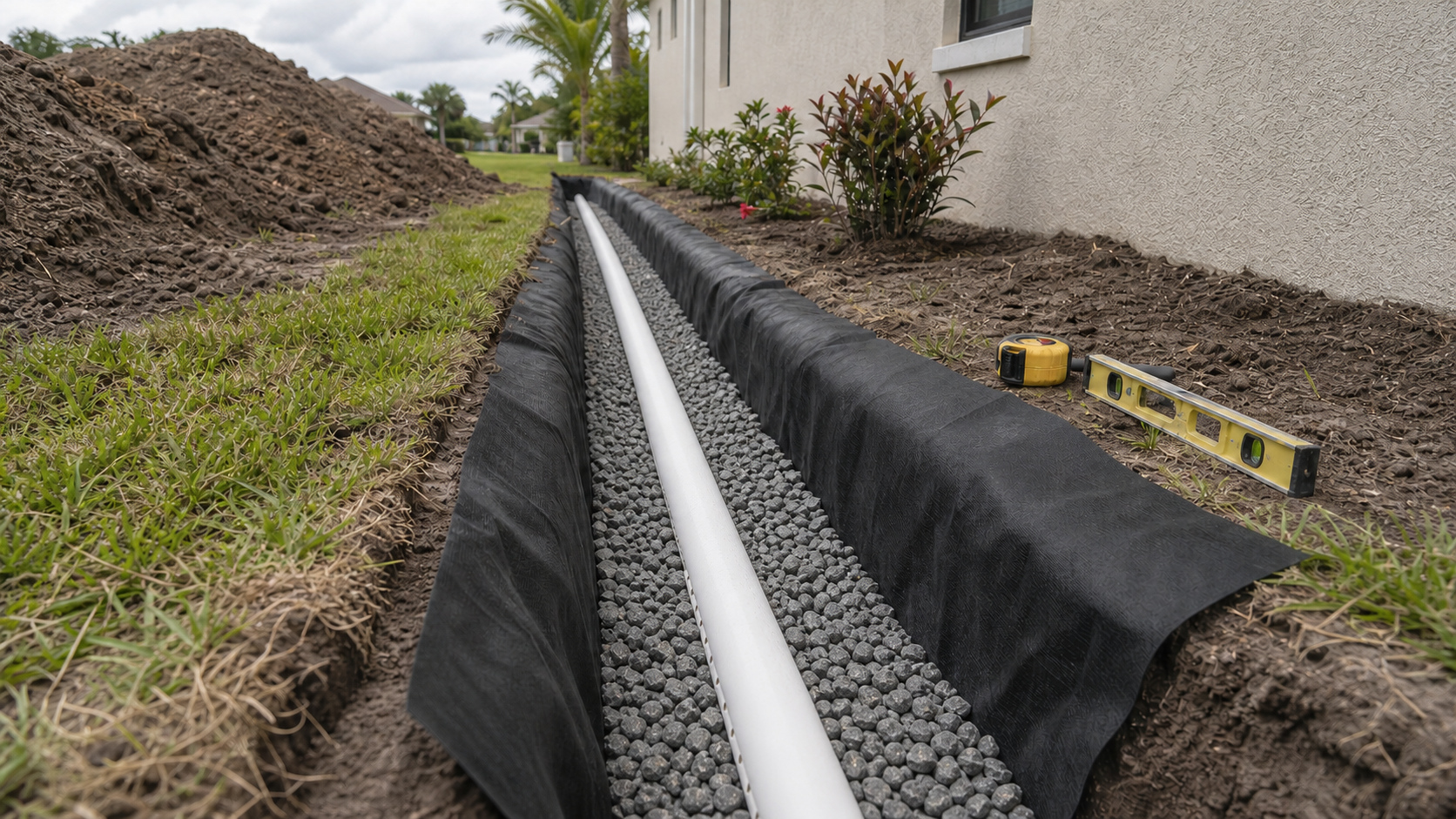
Cape Coral French drain estimate

French Drain Cost in Cape Coral: Compare the Full Scope

Generic per-foot prices miss the route, outlet, access, excavation, and restoration that shape the real scope. Compare those factors, then request a property-specific French drain estimate for your Cape Coral property.

Independent connection service. Cape Coral Drainage Guide receives requests directly. If a suitable local drainage professional is selected, and with your authorization, relevant request details may be shared with that one professional for a response.

French Drain Cost in Cape Coral: Compare the Full Scope drainage visual in Cape Coral

Cape Coral French drain estimate request

Start Your French Drain Estimate Request

Send the water pattern, affected area, Cape Coral ZIP code, likely source, access limits, visible drainage, route or outlet context, desired timing, and preferred reply method. Cape Coral Drainage Guide receives the request first.

  1. Describe the water.State where it starts, where it remains, what triggers it, how long it lasts, and whether a downspout, irrigation zone, hardscape edge, or existing drain is nearby.
  2. Describe the property path.Include the possible collection area, route, outlet, gate width, fences, roots, irrigation, utilities, pavers, concrete, pool equipment, swales, culverts, canals, or prior work.
  3. Name the estimate need.Explain whether you need French drain fit reviewed, a new installation priced, an existing route replaced, or the source-to-outlet scope clarified before comparing quotes.
Prefer to speak with someone? Call (941) 681-8056 Calls are not recorded.
Estimate-ready property contextFlexible reply by phone or emailEncrypted with 30-day deletion
1 Contact details

Choose the reply method you prefer and provide the matching phone number or email address.

2 Property and service

Property type, request category, and timing help frame a more useful estimate conversation.

3 Drainage details

Describe the affected area, rainfall pattern, likely source, access constraints, and desired outcome.

Cape Coral Drainage Guide receives this request first. Provide either a phone number or email that matches your preferred contact method. The provider-sharing choice is optional and does not affect whether the Guide receives your request. Request details are encrypted for follow-up and automatically deleted after 30 days. Photo upload is not enabled. Review the privacy policy.

Price the complete water path

Five Parts of a Comparable French Drain Estimate

A unit price cannot show whether two proposals solve the same problem. Start by tracing the property-specific scope from the observed water source through collection and conveyance to the outlet, restoration, and future maintenance access.

  1. 01

    Water source

    Record whether the wet area follows rain, roof runoff, irrigation, a hardscape edge, an isolated low point, broad soft soil, an existing drain, or an uncertain source.

  2. 02

    Collection zone

    Define where subsurface collection is proposed and distinguish it from any basin, grate, channel drain, downspout adapter, or other inlet that may feed the system.

  3. 03

    Buried route

    Describe collection pipe, solid conveyance segments, transitions, turns, cleanouts, crossings, access constraints, and the path around utilities, roots, irrigation, structures, and hardscape.

  4. 04

    Outlet

    Identify the proposed discharge condition and who must confirm that it is usable, allowed, maintainable, and separated from public or neighboring-property concerns.

  5. 05

    Restoration and access

    State how turf, beds, irrigation, pavers, concrete, excess soil, debris, component locations, maintenance access, and final records are handled.

Comparison rule: when one proposal omits the source, outlet, access, restoration, or maintenance path, its total is not yet comparable with a proposal that includes those items.

Written quote anatomy

Eight Scope Categories That Can Change the Estimate

Use these categories to reveal what is included, excluded, assumed, or still unknown. They are comparison checkpoints, not dimensions, prices, or construction specifications.

System fit and limits
The observed problem, area covered, source being addressed, and work explicitly outside the proposed French drain scope.
Layout and quantities
Collection length, conveyance length, turns, transitions, inlets, adapters, fittings, cleanouts, aggregate, fabric, outlet components, and stated quantity limits.
Excavation conditions
Depth assumptions, wet or unsuitable soil, roots, existing drainage, hand-dig areas, dewatering assumptions, equipment limits, spoil handling, and haul-off.
Access and protection
Gate width, fences, landscaping, irrigation, lighting, pool equipment, structures, pavers, concrete, driveways, equipment and material work area, and surfaces that must remain protected.
Utility and site conflicts
Sunshine 811 notification, separately identified private lines, irrigation, septic components when applicable, property boundaries, and the process for an unexpected conflict.
Outlet work
The final connection or discharge component, erosion protection, accessibility, public-boundary review, and any condition that could change the outlet scope.
Restoration and cleanup
Finish grade, sod, seed, mulch, planting beds, irrigation repair, hardscape restoration, excess-material removal, cleanup, and excluded finish work.
Schedule, changes, and closeout
Expected sequence, written change approval, permit responsibility when applicable, completion criteria, route records, component locations, maintenance guidance, and warranty terms if offered.

Ready for a property-specific estimate?

Send the ZIP code, water pattern, affected area, likely source, access limits, visible drainage, and any outlet context. The French drain service category is already selected.

Request a French drain estimate Call (941) 681-8056

Line-by-line comparison

How to Compare Two French Drain Quotes

Compare the promised result and written scope before comparing the total. This keeps a narrower proposal from appearing equivalent to one that includes the complete route, outlet, restoration, and closeout.

  1. 01

    Normalize the promised result

    Write down the exact wet area and water source each proposal intends to address. Two totals are not comparable if one includes roof runoff, surface inlets, or outlet work and the other does not.

  2. 02

    Compare the same route

    Check whether collection and conveyance lengths, connections, crossings, outlet conditions, and access assumptions describe the same path.

  3. 03

    Compare named materials and limits

    Use written component descriptions and quantity limits. Avoid treating a system name or a single unit rate as the complete assembly.

  4. 04

    Compare exclusions and change control

    Identify unknown soil, utility, irrigation, hardscape, access, outlet, restoration, permit, and disposal conditions that could trigger a written change.

  5. 05

    Compare maintenance and records

    Confirm how inlets, cleanouts, transitions, and the outlet remain findable and serviceable and what route documentation remains after restoration.

Cape Coral and excavation checks

Verify the provider, utility process, and public boundary separately

The City contractor-selection guide recommends written estimates with detailed materials, schedule, and total cost. Use Florida DBPR to verify applicable state license information when regulated work is proposed, and use Sunshine 811 for the utility-notification process before excavation.

Those checks do not decide the drainage design, property boundary, permit requirement, private utility location, or whether an outlet affecting a swale, culvert, right-of-way, canal, street, or neighboring property is authorized. Confirm those items for the actual scope before work begins.

Confirm the problem before pricing the trench

Recurring soft soil, one isolated low point, roof runoff, hardscape flow, a blocked existing drain, and a public stormwater concern are different starting conditions. The estimate should explain why subsurface collection fits the observed water pattern instead of assuming every wet area needs the same trench.

Measure the collection zone and route

Compare the proposed collection length, any solid conveyance segments, turns, depth changes, connections, cleanouts, and the path around structures, trees, irrigation, utilities, fences, pavers, and pool equipment.

Name the outlet and discharge boundary

A quote is incomplete when it describes collection but leaves the outlet undefined. Ask where water is expected to go, who confirms that location, and whether a swale, culvert, canal, right-of-way, neighboring property, or other public boundary needs separate review.

Describe the assembly and quantities

The written scope should identify the filter boundary, aggregate envelope, collection and conveyance pipe, fittings, inlets, adapters, cleanouts, outlet components, and stated material quantities or limits instead of using only a product label.

Account for access and excavation conditions

Gate width, hand-digging areas, roots, wet soil, existing drainage, buried utilities, private irrigation or lighting, hardscape protection, equipment access, spoil handling, and temporary site protection can materially change the work included.

Compare restoration and closeout

Confirm sod, planting-bed, irrigation, paver, concrete, or landscape restoration; excess-soil and debris removal; final cleanup; route records; component locations; maintenance instructions; exclusions; and written change approval.

Local reference points

Useful Sources for This Drainage Topic

These industry and public references help organize visible property conditions and separate private yard drainage questions from stormwater, right-of-way, utility-marking, and seasonal rainfall context.

Questions

Drainage FAQs

Can I get a French drain price without a site visit?

An initial call or form request can frame the likely scope, but photos alone rarely confirm elevations, the complete route, outlet options, underground conflicts, access limits, soil conditions, or restoration. Property-specific pricing should follow a site review or another clearly documented verification process.

Why can two French drain estimates be far apart?

They may describe different collection lengths, pipe roles, materials, inlets, cleanouts, outlets, excavation assumptions, access, utility conflicts, restoration, exclusions, or closeout records. Normalize those line items before treating the totals as comparable.

Should a French drain estimate show the route and outlet?

Yes. The written scope should identify the collection area, approximate route, connections, maintenance access, and proposed outlet or discharge condition. The level of drawing can vary, but a product name alone is not a complete water path.

What should I send before requesting an estimate?

Send the Cape Coral ZIP code, affected area, photos during or after rain, how long water remains, nearby downspouts or hardscape, visible drains and outlets, possible access limits, prior drainage work, and the reply method you prefer.

How should I check the contractor and written estimate?

Ask for the exact business name and applicable license information, verify current records through Florida DBPR when state-regulated work is proposed, and compare the written materials, schedule, total, scope, exclusions, change process, and closeout terms. Cape Coral publishes a contractor-selection checklist for this review.

Does Sunshine 811 approve the French drain route or outlet?

No. Sunshine 811 supports the utility-notification process before excavation. Utility marks do not establish property boundaries, identify every private line, select the drainage system, approve a permit, or confirm that a proposed outlet is allowed.

Related services

Service Pages Connected to This Topic

Related resources

Keep Comparing the Drainage Issue

Next step

Request a Cape Coral French drain estimate.

Call now Request estimate