Catch basin
Starts with one low point where surrounding surface flow converges.
- Geometry
- One collection location
- Typical evidence
- A visible bowl-shaped low area or existing grate
- Maintenance focus
- Grate, basin sump, pipe connection, and outlet
 Cape Coral Drainage GuideCape Coral yard drainage requests
Cape Coral surface drainage service
The central difference is collection geometry. A catch basin or area inlet receives water at a point; a channel drain, often called a trench or linear drain, intercepts water along a line. Neither choice is complete until the hardscape flow, connected route, outlet, grate demands, debris, and maintenance access are understood.
Cape Coral drainage requests. Tell us where water collects, what appears to feed it, and how you prefer to be contacted. We review every request and follow up with clear next steps.
Surface drainage service request
Send the hardscape flow pattern, affected area, Cape Coral ZIP code, desired timing, and preferred reply method without leaving this page.
Point versus line collection
Use the observed flow pattern to frame the first comparison. Final placement, capacity, materials, route, outlet, and hardscape details remain property-specific.
Starts with one low point where surrounding surface flow converges.
Starts with water crossing a driveway, threshold, patio, walkway, or paver line.
Both are inlets, not complete drainage systems. Each still needs a workable route, appropriate outlet, cleaning access, utility review, restoration plan, and public-or-private boundary check.
A catch basin is discussed where surface water converges at one identifiable low point. The basin can settle some debris and connect to a pipe, but its location must actually receive the surrounding flow.
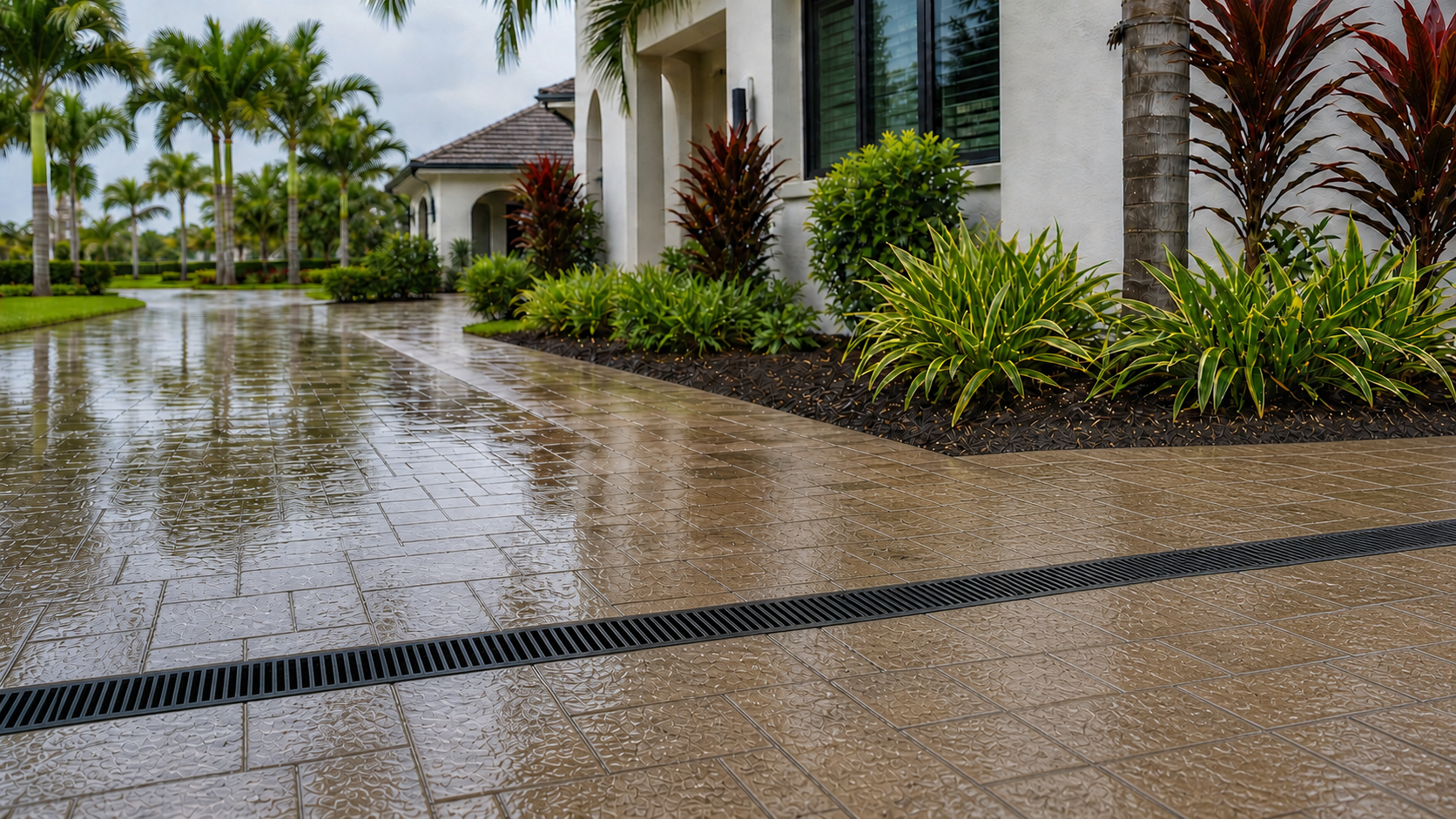
A channel drain is discussed where runoff crosses a line such as a garage threshold, driveway edge, patio transition, walkway, or paver boundary. Its length and placement follow the crossing pattern rather than one isolated low point.
Channel drain, linear drain, and trench drain are often overlapping terms for a long surface inlet. The useful comparison is the actual channel body, grate or slot, load conditions, depth, connection, slope, cleaning access, and outlet rather than the label alone.
Area drain can be a broad name for a point inlet. Catch basin more often describes a box-style structure that may include space below the outlet for sediment. Ask whether the proposed inlet has a removable grate, debris sump, pipe connection, and accessible cleaning path.
A catch basin is selected to receive surface runoff, while a manhole is primarily an access or junction structure within a larger pipe system. Public structures use agency-specific details and names, so a roadway or swale feature should not be treated as a private residential drain by appearance alone.
Observe slope breaks, wheel paths, garage or door thresholds, paver settlement, roof discharge, landscape edges, and where water changes direction. A grate placed outside the real flow path cannot collect what never reaches it.
Driveways, walkways, pool decks, and patios create different traffic, slip, corrosion, opening-size, and surface-transition questions. Ask how the selected grate and surrounding hardscape suit the actual location.
A point basin may collect sediment in a sump, while a long channel can gather leaves, mulch, sand, and paver debris across multiple grate sections. Compare how each grate, basin, pipe connection, and outlet can be opened and cleaned.
Both collection types still need a connected route and an appropriate outlet. Verify access, elevation, restoration, utilities, neighboring-property boundaries, swales, and right-of-way questions before treating the inlet as the whole solution.
Cape Coral maintains public stormwater features within the public right-of-way and directs clogged, damaged, or sunken public catch-basin reports to 311. A private driveway, patio, pool-deck, or yard inlet request should identify the property boundary before work is discussed.
Local reference points
These industry and public references help organize visible property conditions and separate private yard drainage questions from stormwater, right-of-way, utility-marking, and seasonal rainfall context.
Questions
A channel drain may fit water crossing the driveway along a line, while a catch basin may fit one low collection point. The observed flow path, connected route, outlet, traffic, and maintenance access decide the useful comparison.
They may appear in the same broader system when separate collection patterns need to connect to a route, but each inlet and connection still requires property-specific review.
The terms often overlap for linear surface drainage, although products and construction methods vary. Compare the channel, grate or slot, load rating, depth, connection, slope, maintenance access, and outlet specified for the property.
Area drain is often used broadly for a point inlet. A catch basin may include a deeper box or sump for debris. The written scope should show the exact grate, structure, pipe connection, cleanout path, and outlet.
Not usually. A catch basin receives surface runoff and may retain debris, while a manhole commonly provides access to or a junction within a larger storm-drain system. Local public-system terminology and details can vary.
That depends on grate access, basin depth, channel length, debris type, pipe cleanouts, and outlet access. Ask for the complete maintenance path rather than assuming one product is maintenance-free.
Not by itself in every case. Catch basins and channel drains collect visible surface flow. Soft or saturated soil may involve different source, grading, subsurface, irrigation, or outlet questions.
The City of Cape Coral asks residents to report clogged, damaged, or sunken public catch basins through its 311 Call Center. Confirm whether the feature is public or private before requesting property work.
Related services
Related resources
Next step