Cape Coral channel drain and French drain comparison

Channel Drain vs French Drain in Cape Coral

A channel drain intercepts surface runoff along a hardscape line. A French drain collects water through stone and perforated pipe in soil. Compare the visible water path, collection zone, route, outlet, and maintenance access before requesting work.

Independent connection service. Cape Coral Drainage Guide receives requests directly. If a suitable local drainage professional is selected, and with your authorization, relevant request details may be shared with that one professional for a response.

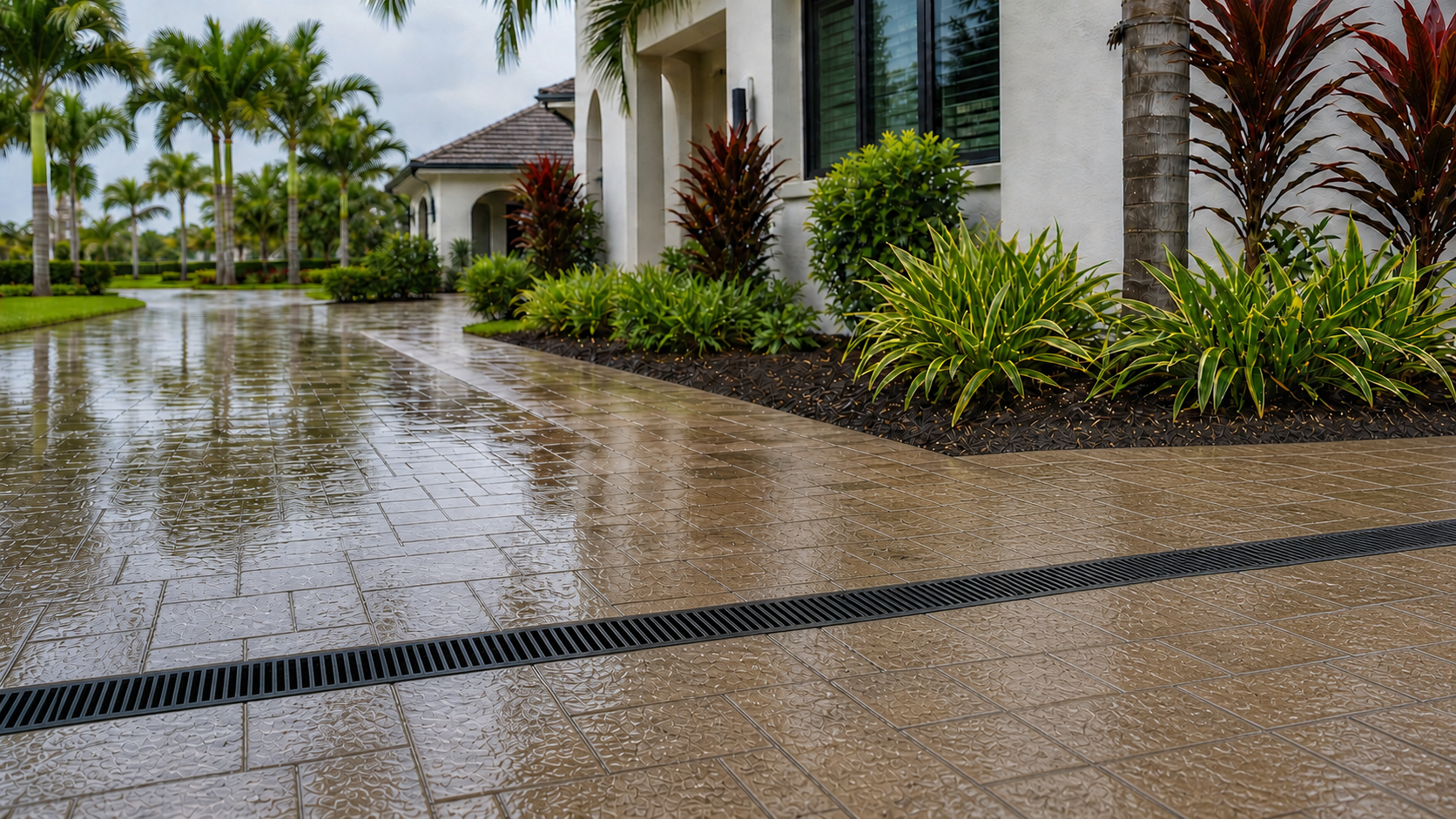
Continuous channel drain intercepting surface runoff across wet pavers at a Cape Coral home

Subsurface versus surface collection

See the Difference Before Comparing a Scope

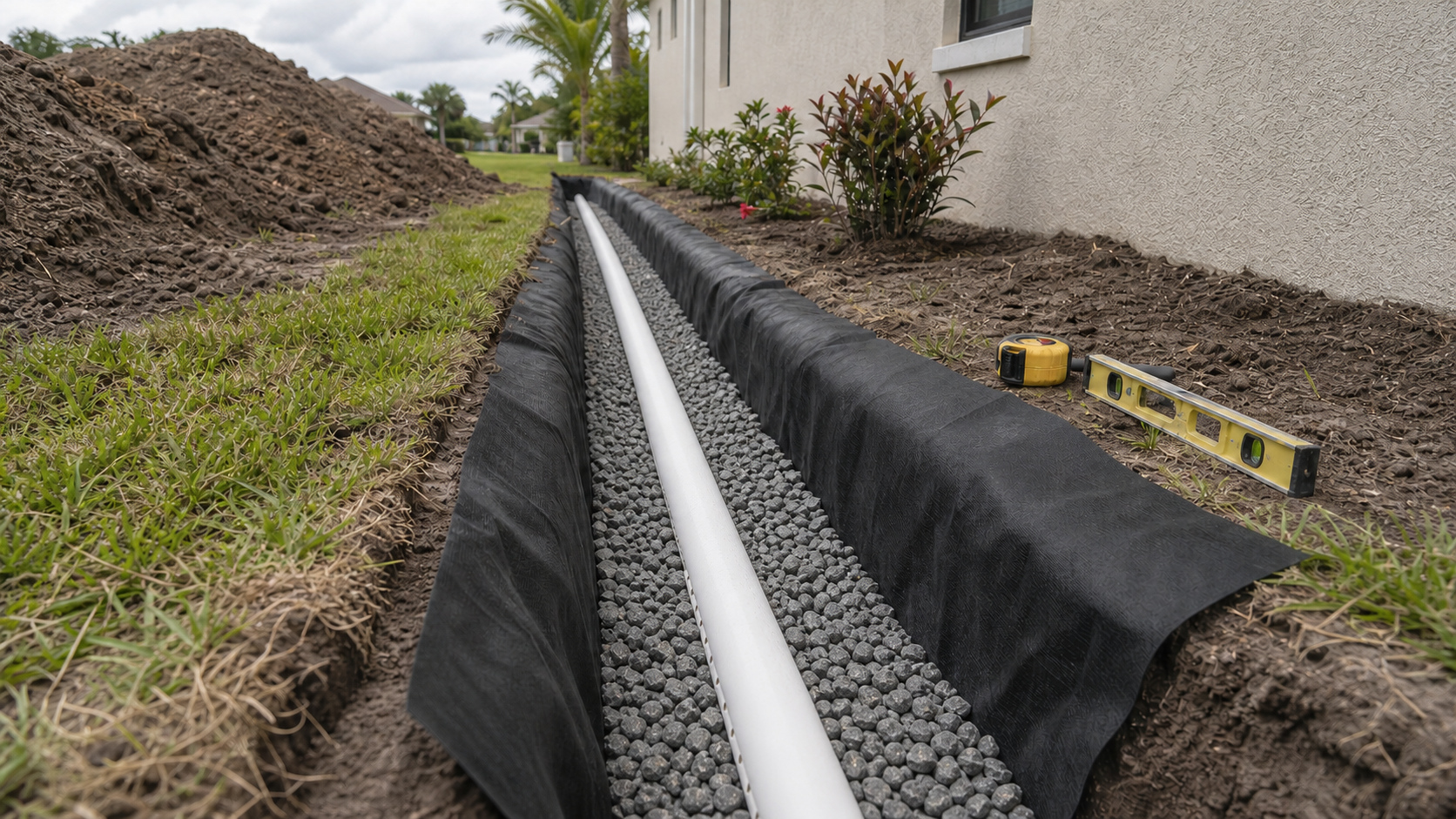
The drain name should follow the observed water path. These visuals show the collection zone for each system; neither image establishes the right layout, capacity, route, or outlet for a particular property.

Flush channel drain intercepting a line of surface runoff across wet pavers
Surface line

Channel drain

A grate and channel intercept runoff where it crosses a hardscape line, then direct it into a connected conveyance route.

French drain trench with perforated pipe, angular stone, and filter fabric in a side yard
Subsurface strip

French drain

A stone-filled trench and perforated pipe collect water through soil along the trench before the route conveys it onward.

Not sure which pattern matches?

Describe what happens during rain and request an on-property comparison without selecting a system first.

Request a system comparison Call (941) 681-8056

Decision matrix

Channel Drain vs French Drain at a Glance

Use each row as a property-observation prompt. More than one pattern can exist on the same lot, so the final scope may combine collection methods.

Property question Channel drain French drain
What shape does the water follow?

A visible sheet or band of runoff crosses a driveway, patio, walkway, paver field, or threshold edge.

A broad strip of soil remains wet, or water moves through saturated ground rather than only across the surface.

Where does water enter?

Through a removable grate along a continuous surface collection line.

Through stone and filter fabric into a perforated pipe along a subsurface collection trench.

What surface is being treated?

Usually hardscape where the surrounding finish can slope toward the channel.

Usually lawn, planting bed, or another soil area where an excavated collection zone can intercept water.

What must the scope explain?

Channel location, grate and load context, transitions, connected solid pipe, access for cleaning, and the outlet.

Trench location, stone and fabric, perforated collection pipe, solid conveyance where needed, cleanouts, and the outlet.

What maintenance remains visible?

Leaves, mulch, sand, and sediment on the grate or inside the channel; removable sections and pipe access matter.

Accessible inlets, cleanouts, stone condition, settlement, roots, sediment, and outlet flow should be reviewable where the layout allows.

What can change the answer?

Hardscape elevations, flow direction, threshold risk, traffic or load conditions, available depth, pipe route, and discharge location.

Water source, soil behavior, trench depth, utilities, roots, available fall, route length, outlet condition, and nearby hardscape.
Comparison boundary: this matrix organizes observations. It does not diagnose the property, size a drain, establish elevations or boundaries, approve an outlet, or replace contractor, utility, permit, surveying, or engineering review when applicable.

Complete drainage route

Neither Inlet Works as a Standalone Label

A useful proposal should connect the source of water to collection, conveyance, outlet, and future access. Comparing only the grate or trench leaves the most important downstream questions unanswered.

  1. 01

    Source

    Identify rain, roof runoff, irrigation, adjacent hardscape, an existing drain, or another repeatable source.

  2. 02

    Collection

    Match the water pattern to a line drain, subsurface trench, point inlet, grading correction, or combined approach.

  3. 03

    Conveyance

    Trace pipe type, transitions, turns, cleanouts, crossings, access constraints, and conflicts along the full route.

  4. 04

    Outlet

    Confirm where water can discharge, who controls that location, and whether it remains accessible and appropriate.

  5. 05

    Maintenance

    Keep grates, cleanouts, inlets, transitions, and the outlet reachable enough to inspect and service.

When neither label is enough

Check the Pattern Around the Drain

The visible problem may point to another collection method, a source correction, surface work, or a public stormwater report before a channel or French drain is scoped.

One low point

A catch basin may be the closer comparison

When surrounding runoff converges at one surface low point, a basin or area drain may collect the pattern more directly than a long channel or subsurface trench. The connected route and outlet remain part of the same decision.

Compare point and line collection
Water starts at the roof

The downspout route may be the first correction

A wet strip beside a house can be fed by concentrated roof water. Document the roof section, adapter, buried pipe if present, discharge point, and whether water reaches the hardscape or soil before selecting another drain.

Trace roof-runoff drainage
The grade holds water

Collection alone may not fix the surface

A low finish, settled pavers, inward slope, or blocked route can keep water in place. The service scope may need grading, surface restoration, or source correction together with or instead of a new inlet.

Review grading questions
Public right-of-way

City infrastructure follows a different path

Cape Coral maintains public swales, drainage pipes, catch basins, canals, and related stormwater facilities in the right-of-way. A public swale, culvert, street inlet, or catch-basin concern should be reported through City 311.

Review Cape Coral stormwater guidance

Property visit checklist

Ask for a Source-to-Outlet Walkthrough

A service visit is more useful when the water pattern and complete route are discussed before a system name is locked in.

  • Where does water first appear during rain?
  • Does it cross hardscape, remain in soil, or do both?
  • What downspouts, irrigation, slopes, or adjacent surfaces feed it?
  • Where would a channel or subsurface trench intercept the path?
  • Which segments collect water and which only convey it?
  • What pipe transitions, cleanouts, and crossings are proposed?
  • Where is the outlet, and who must confirm it can be used?
  • How will grates, stone, pipe access, and the outlet be maintained?
  • What utilities, private lines, roots, pavers, or access limits affect the route?
  • What restoration, exclusions, and change conditions belong in the written scope?

Keep private work and public stormwater separate

Cape Coral identifies swales, drainage pipes, catch basins, canals, and related facilities in the public right-of-way as City stormwater infrastructure. Report concerns with those public features through City 311. Before private excavation, confirm Sunshine 811 notification, private-line checks, and any applicable City review.

Drainage system comparison request

Request a Channel Drain or French Drain Review

Send the observed water path, affected surface, Cape Coral ZIP code, desired timing, and preferred reply method without choosing a system first.

  1. Observe one rain event.Note whether water crosses hardscape, remains in soil, converges at one low point, or follows a downspout.
  2. Trace the possible route.List visible grates, pipes, cleanouts, outlets, swales, culverts, thresholds, and access limits.
  3. Ask for the comparison.Request a source-to-outlet review of channel, French, point-drain, grading, or combined options for the property.
Prefer to speak with someone? Call (941) 681-8056 Calls are not recorded.
System comparison channel drain, French drain, or combined scopeYour reply choice by phone or emailEncrypted with 30-day deletion
1 How to reach you

Select the way you want a response and enter the phone number or email address that should be used.

2 Request location

Use the Cape Coral ZIP code and broad service category to route the first follow-up to the right subject.

3 What is happening

Describe whether water crosses hardscape or remains in soil, the rain pattern, affected area, nearby downspouts, visible drains, possible route and outlet, and what you want compared during the visit.

Cape Coral Drainage Guide receives this request first. Provide either a phone number or email that matches your preferred contact method. The provider-sharing choice is optional and does not affect whether the Guide receives your request. Request details are encrypted for follow-up and automatically deleted after 30 days. Photo upload is not enabled. Review the privacy policy.

Start with the water path

Watch one rain event. Record whether water moves as a sheet across pavers or pavement, remains broadly in soft ground, follows a downspout, or converges at one low point.

Separate collection from conveyance

A channel or French drain describes how water enters. The buried route, transitions, cleanouts, and outlet still determine where the collected water can go.

Plan for access

Channel grates need surface access. French drain performance depends on the stone-and-fabric collection zone plus accessible inlets, cleanouts, and outlet where the layout includes them.

Confirm the boundary

Private-yard drainage work should remain separate from City-maintained swales, culverts, catch basins, canals, and other public right-of-way infrastructure.

Local reference points

Useful Sources for This Drainage Topic

These industry and public references help organize visible property conditions and separate private yard drainage questions from stormwater, right-of-way, utility-marking, and seasonal rainfall context.

Questions

Drainage FAQs

Is a channel drain better than a French drain for a driveway?

A channel drain is the more direct comparison when sheet flow crosses a driveway, garage threshold, patio, or walkway because it creates a surface collection line. The hardscape slope, expected flow, connected pipe, and outlet still need property-specific review.

Is a French drain better for a soggy side yard?

A French drain may fit a broad wet strip or subsurface water in soil when water can enter the stone trench and a workable route and outlet exist. A downspout discharge, irrigation issue, low grade, or isolated surface low point may call for a different or combined scope.

Can a channel drain connect to a French drain?

A project can combine surface and subsurface collection, but the transition and downstream conveyance need to be intentional. A service professional should identify what enters each component, whether solid or perforated pipe belongs in each segment, and where the complete route discharges.

What if water collects at one low point instead of across a line?

A catch basin or area drain may be the closer surface-collection comparison when runoff converges at one point. Grading, downspout routing, and the downstream outlet should still be reviewed.

Does either drain work without an outlet?

Neither label solves the full route by itself. The request should identify a maintainable collection point, conveyance path, and lawful discharge condition without shifting water onto neighboring property or unapproved public infrastructure.

Should utilities and permits be checked before digging?

Yes. Planned excavation should account for Sunshine 811 notification, private lines that 811 may not mark, and any applicable Cape Coral review before work begins.

Related services

Service Pages Connected to This Topic

Related resources

Keep Comparing the Drainage Issue

Next step

Request a channel-drain versus French-drain property review.

Call now Request estimate