Problems to describe
Request help for recurring standing water, soggy turf, side-yard runoff, water crossing a driveway or patio, blocked private drains, concentrated downspout discharge, or an existing system that no longer moves water as expected.
 Cape Coral Drainage GuideCape Coral yard drainage requests
Cape Coral drainage contractor service
Call or send the water pattern, affected area, Cape Coral ZIP code, visible drainage components, desired timing, and preferred reply method to begin a drainage contractor service conversation.
Cape Coral drainage requests. Tell us where water collects, what appears to feed it, and how you prefer to be contacted. We review every request and follow up with clear next steps.
Cape Coral drainage contractor request
Send the water pattern, affected area, ZIP code, visible drainage components, desired timing, and preferred reply method without leaving this page.
Contractor comparison
A professional proposal should connect the observed water path to a complete scope, identify the responsible business, and leave clear records for permits, excavation, restoration, maintenance, changes, and payment.
Ask who will evaluate the property and who will perform excavation, grading, pipe, catch-basin, downspout, hardscape, irrigation, restoration, or other specialty work. A product name alone does not explain the water source, route, outlet, or responsibility for the full job.
Open the contractor interview checklistFor state-regulated work, compare the individual contractor, license status, specialty, and business entity in Florida DBPR records. The business proposing the work should match the entity shown with the qualifying contractor.
Verify through Florida DBPRAsk Cape Coral Permitting Services what applies to the exact property and scope. City registration supports permit access, but the City states that it does not validate contractor insurance or workers' compensation; request current evidence directly.
Review Cape Coral permittingThe estimate should identify collection points, route, outlet, materials, access, cleanouts, excavation, utility marking, spoil handling, restoration, exclusions, permit responsibility, change approval, maintenance, warranty language, schedule, and payment milestones.
Compare estimate line itemsClarify utility marking before digging and identify any swale, culvert, right-of-way, public catch basin, canal, neighboring-property, or other boundary that needs City, utility, surveying, engineering, or specialty review.
Review Sunshine 811Send the water pattern, affected area, visible components, ZIP code, access constraints, desired timing, and preferred reply method.
Scope boundary: this checklist does not select a contractor, determine the license or permit required for a specific job, verify insurance, establish elevations or property lines, approve an outlet, or replace legal, surveying, engineering, utility, or City review when applicable.
Request help for recurring standing water, soggy turf, side-yard runoff, water crossing a driveway or patio, blocked private drains, concentrated downspout discharge, or an existing system that no longer moves water as expected.
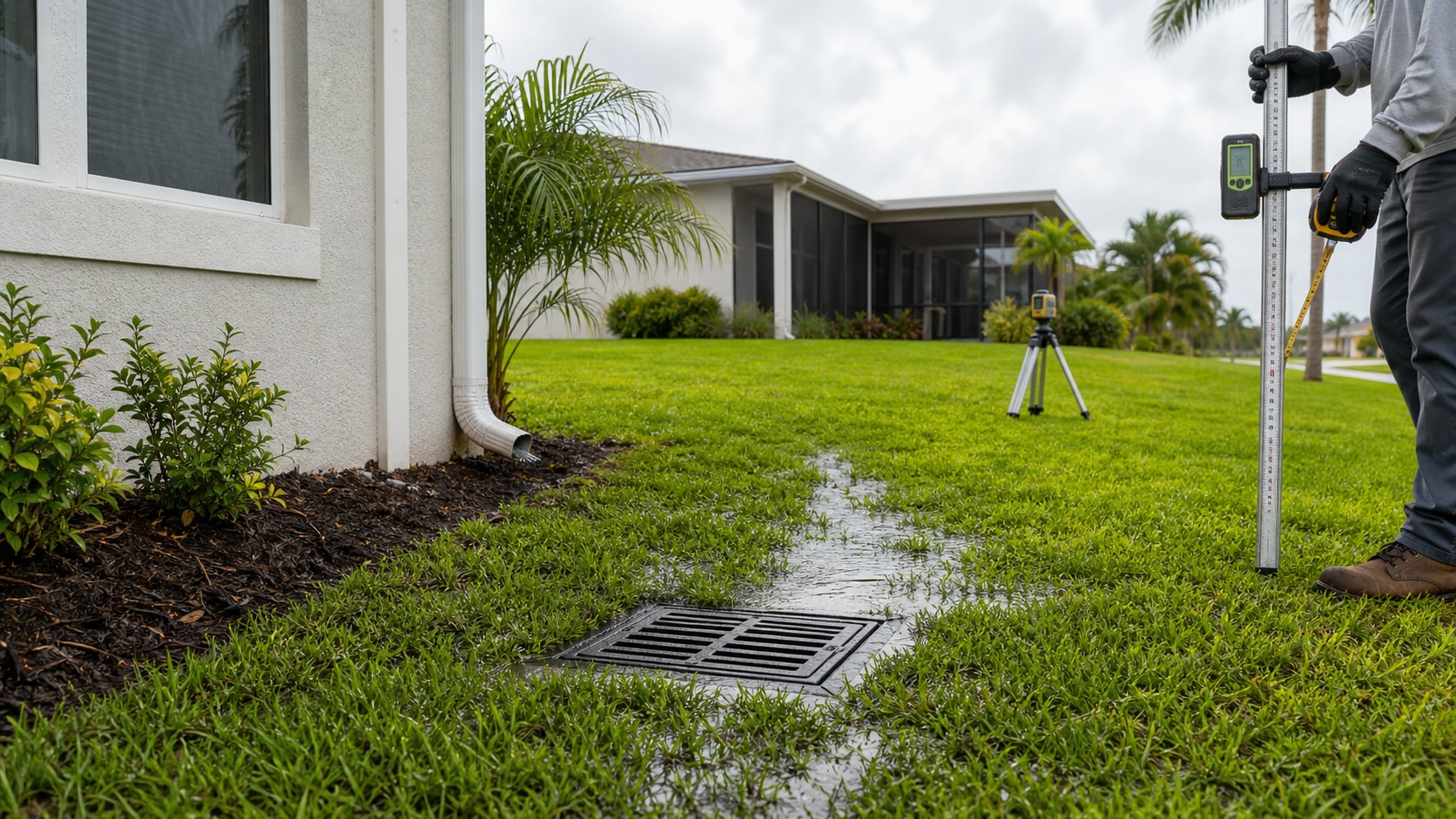
A useful visit identifies where water starts, where it collects, how long it remains, the likely route, a workable outlet, maintenance access, and nearby roots, irrigation, utilities, pavers, pool equipment, fences, swales, canals, or neighboring-property constraints.
Ask whether the proposed work includes grading, downspout routing, a French drain, catch basin, area drain, channel drain, solid pipe, cleaning, repair, outlet work, restoration, or a combined approach. The estimate should connect the system choice to the observed water path.
Use the Florida DBPR record to compare the contractor's individual license, status, specialty, and qualifying business name when state-regulated work is proposed. Ask for current insurance evidence directly; City registration alone is not insurance proof.
Ask who confirms permit requirements, submits any permit, requests utility marking before excavation, and handles work near a swale, culvert, right-of-way, public catch basin, canal, or another regulated boundary.
Compare collection points, route, outlet, materials, pipe or basin sizes when specified, cleanouts, utility marking, access, spoil handling, surface restoration, exclusions, schedule, change approval, maintenance, warranty language, permit responsibility, and payment milestones.
Include the Cape Coral ZIP code, property type, last-rain timing, how long water remains, affected area, visible inlets or outlets, prior drainage work, desired timing, access limits, and whether water is approaching the home, driveway, pool deck, or neighboring property.
Local reference points
These industry and public references help organize visible property conditions and separate private yard drainage questions from stormwater, right-of-way, utility-marking, and seasonal rainfall context.
Questions
Send the ZIP code, affected area, rainfall timing, how long water remains, nearby downspouts or hardscape, visible drains and outlets, prior work, access constraints, desired timing, and preferred reply method.
Ask for the individual license number and exact business name, then compare both in Florida DBPR records. Confirm the license status, specialty, and whether the individual shown in the record qualifies the business proposing the work.
No. Cape Coral states that City registration does not validate contractor insurance or workers' compensation. Request current evidence directly and confirm that the named business and proposed scope match the documents.
Permit needs depend on the exact work and location. Ask Cape Coral Permitting Services about the proposed scope, especially when work affects a driveway, culvert, right-of-way, grade, building connection, public feature, or another regulated area.
Compare the diagnosed source, collection method, route, outlet, materials, access, utility marking, restoration, exclusions, permit responsibility, change process, maintenance plan, warranty terms, schedule, and payment milestones rather than comparing only the total.
Use City channels for public catch basins, street flooding, damaged public stormwater infrastructure, roadside swales, culverts, or right-of-way concerns. Keep private-property drainage and public-feature requests as separate scopes when both are involved.
Related services
Related resources
Next step