Source correction or downspout routing
Contributing roof area, adapter, existing buried line, solid pipe route, fittings, cleanouts, outlet, landscape disturbance, and hardscape crossings.
Review downspout drainage scope Cape Coral Drainage GuideCape Coral yard drainage requests
Cape Coral drainage cost and estimates
A useful Cape Coral drainage estimate prices a defined result, not just a drain name. Compare the diagnosed water source, collection method, connected route, outlet, access, excavation, restoration, and written exclusions before comparing totals.
Cape Coral drainage requests. Tell us where water collects, what appears to feed it, and how you prefer to be contacted. We review every request and follow up with clear next steps.

Price the complete drainage result
The system name is not the whole price. A useful estimate connects the observed problem to a defined collection method, route, outlet, restoration plan, and closeout record so two totals can be compared against the same deliverable.
Define the affected area, repeatable water source, rain or irrigation timing, duration, visible drainage, prior work, and the result the proposal is intended to achieve.
State whether the scope changes the source, adjusts grade, collects subsurface water, intercepts surface flow, receives one low point, services an existing system, or combines approaches.
Describe the collection and conveyance limits, transitions, turns, crossings, cleanouts, hardscape, roots, irrigation, utilities, access constraints, and every connection included in the price.
Identify the proposed endpoint, who controls it, how it remains maintainable, and whether a swale, culvert, street, canal, right-of-way, neighbor, or other public boundary needs separate confirmation.
Name turf, beds, irrigation, pavers, concrete, spoil, cleanup, finish work, route records, component locations, maintenance guidance, schedule, change control, and warranty terms if offered.
Comparison rule: when a proposal does not name the problem, connected route, outlet, access, restoration, or exclusions, its total is not yet comparable with a proposal that does.
Different systems, different written scope
Roof runoff control, surface collection, and subsurface collection can involve different components and excavation, but each estimate should still explain collection, conveyance, outlet, restoration, and maintenance access.
Scope changes by approach
These are comparison categories, not recommendations for a specific property. The observed water pattern, route, outlet, and applicable professional or City review determine which conversation belongs in the estimate.
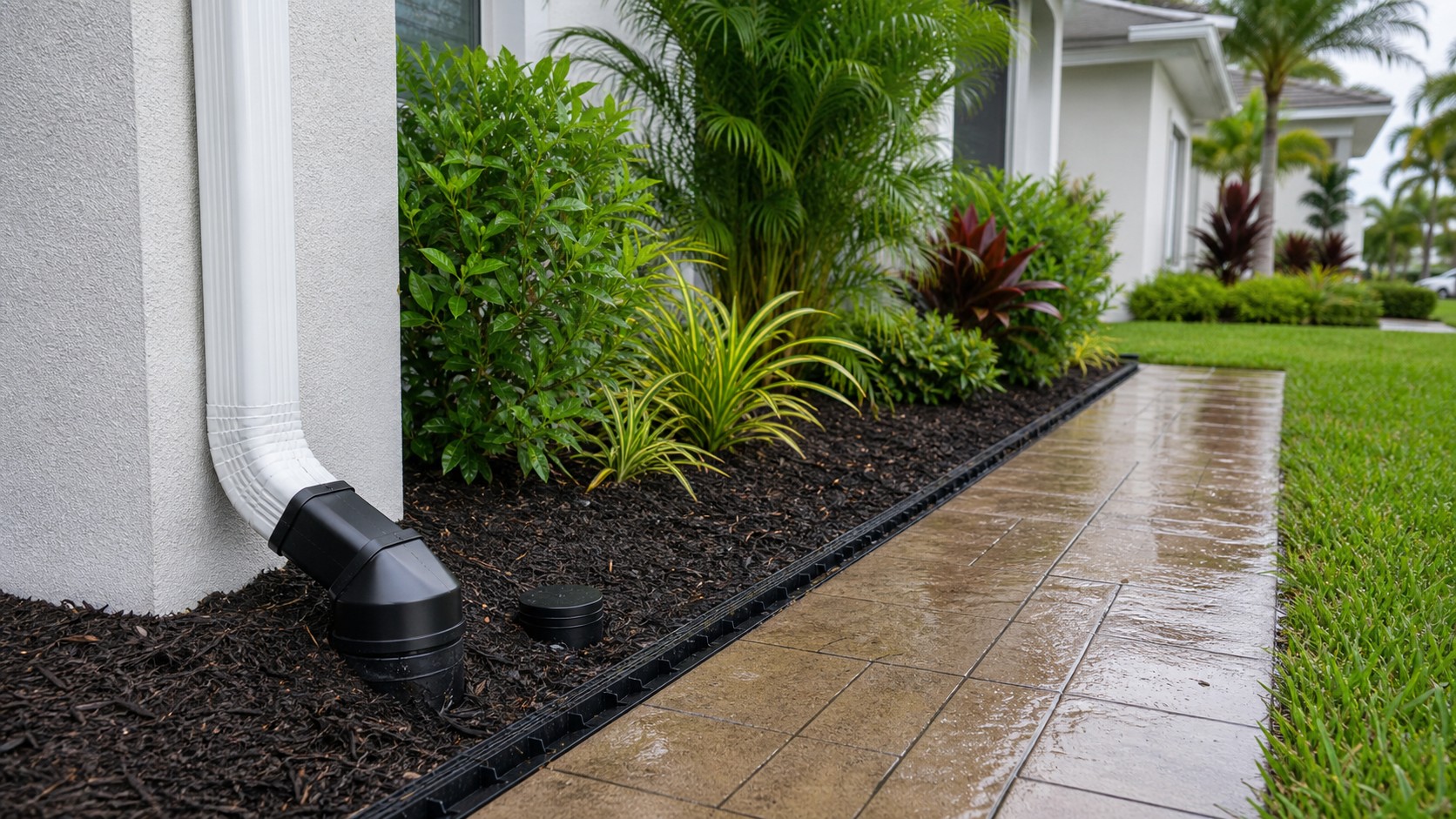
Contributing roof area, adapter, existing buried line, solid pipe route, fittings, cleanouts, outlet, landscape disturbance, and hardscape crossings.
Review downspout drainage scopeAffected area, elevations or observed grades, imported or removed material, transitions, erosion control, turf or bed restoration, drainage destination, and regulated-professional questions.
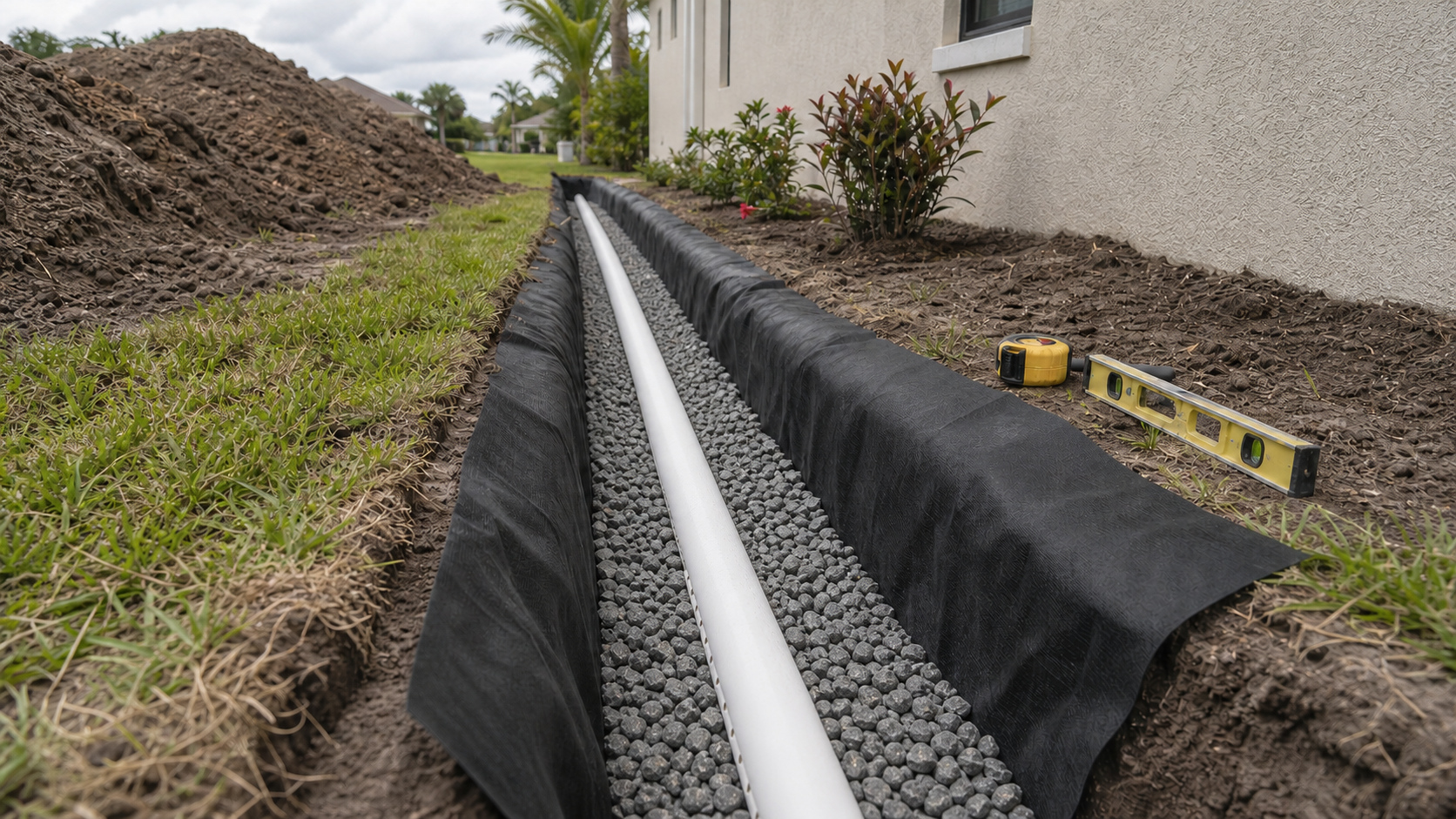
Review grading considerationsCollection length, trench limits, filter boundary, aggregate, perforated and solid pipe segments, transitions, cleanouts, outlet, access, spoil, and restoration.
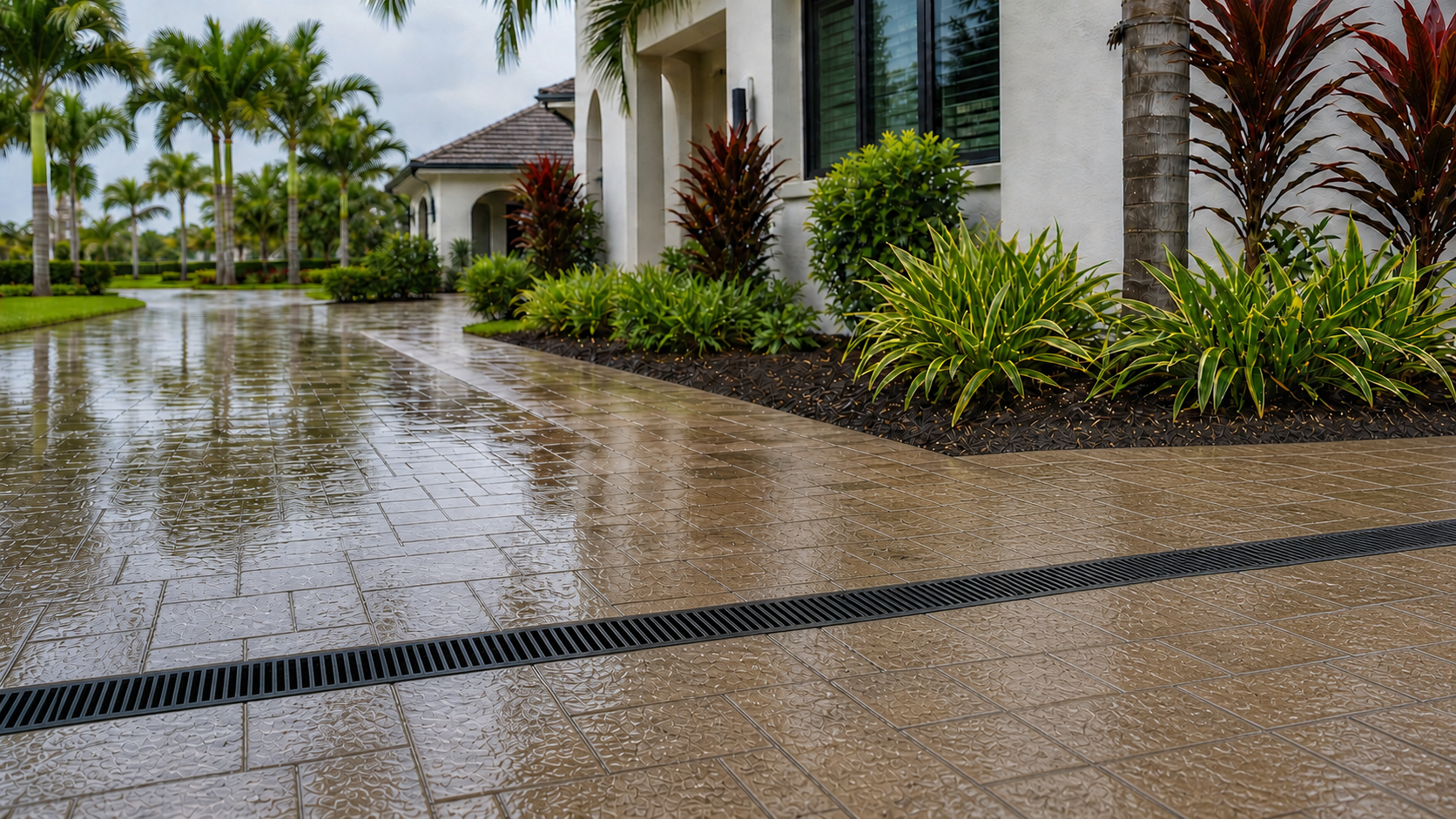
Compare French drain estimate scopeLine or point collection, grate and load context, basin or channel, connected pipe, transitions, service access, hardscape work, outlet, and restoration.
Review surface-drain installation scopeNamed inlets, basins, cleanouts, pipe segments, outlets, inspection access, cleaning method, repair limits, replacement triggers, debris handling, and tested result.
Review outdoor drain service scopeWritten quote anatomy
A contractor's written estimate should make the promised result and included work visible. Use the same categories for every proposal so omissions, assumptions, and change triggers do not hide inside a single final number.
Send the ZIP code, water pattern, affected area, likely source, visible drainage, access limits, possible route or outlet, prior work, desired timing, and reply preference. Drainage estimate is already selected.
Property context changes scope
Two homeowners can use the same phrase while describing different water sources, surfaces, access conditions, routes, outlets, and responsible parties. Put the actual property context into the request and proposal.
Separate concentrated roof runoff, irrigation, a narrow low strip, broad soft soil, an existing route, and another source. Access width, roots, utilities, outlet feasibility, spoil movement, and turf restoration can materially change the scope.
Trace the width and direction of surface flow, threshold risk, paver or concrete removal, line versus point collection, connected pipe, traffic or pedestrian context, restoration, and the available outlet.
Name the contributing downspouts, adapters, existing lines, solid conveyance, cleanouts, crossings, outlet, and landscape or hardscape work. A downspout connection is only one part of the complete route.
Record every visible inlet, basin, cleanout, pipe end, overflow point, and outlet. Compare cleaning, localized repair, rerouting, partial replacement, and new installation as different deliverables.
Keep private-yard work separate from a roadside swale, culvert, street inlet, canal, right-of-way, or public catch basin. Confirm the responsible party before a private estimate assumes work on that feature.
Line-by-line comparison
Use the same sequence for every proposal. It prevents a narrower line item from looking equivalent to a complete solution and makes unresolved conditions visible before work begins.
Write one plain-language description of the affected area, source, timing, duration, and desired result. Confirm that every proposal addresses that same problem.
Compare collection, connected route, outlet, service access, and work limits. A proposal for one inlet is not equivalent to a complete source-to-outlet route.
Line up materials, quantities or limits, excavation, access, utilities, irrigation, hardscape, restoration, cleanup, records, and maintenance provisions.
Mark every unresolved source, soil, utility, route, outlet, boundary, permit, access, disposal, and restoration condition that could change the written total.
Only compare price after the promised result and scope are aligned. Put any change in writing before added work proceeds and keep the final route and component record.
Cape Coral contractor and excavation checks
The City contractor-selection guide recommends several written estimates and says a detailed estimate should identify materials, duration, and total cost. Use Florida DBPR to verify applicable state license information when regulated work is proposed, and confirm permit responsibility through Cape Coral Permitting Services for the actual scope.
Sunshine 811 supports public utility notification before excavation but does not identify every private facility or approve the drainage design, property boundary, permit, or outlet. Confirm private utilities, irrigation, boundaries, and any swale, culvert, canal, street, right-of-way, public feature, or neighboring-property issue separately before work begins.
Property-specific confirmation: this comparison framework does not diagnose the site, select or size a system, establish grades or boundaries, approve an outlet, or determine permit, licensing, surveying, engineering, utility, or City requirements for a proposed scope.
Cape Coral drainage estimate request
Send the water pattern, affected area, Cape Coral ZIP code, visible drainage, likely source, access limits, route or outlet context, prior work, desired timing, and preferred reply method without leaving this page.
The estimate should separate roof runoff, irrigation, an isolated low point, broad soft soil, an existing buried route, and another source before assuming that a French drain or grading work is the right scope.
Surface slope, the width of the flow path, threshold risk, paver or concrete restoration, collection type, connected pipe, traffic context, and the outlet can all change the written deliverable.
The contributing roof area, existing adapter or buried line, collection point, solid conveyance route, cleanouts, outlet, landscaping, and hardscape crossings belong in the same comparison.
A service scope can differ from new installation. Ask which inlets, basins, cleanouts, pipe segments, transitions, and outlets will be inspected, cleaned, repaired, replaced, or left unchanged.
A roadside swale, culvert, street inlet, canal, right-of-way, or other public feature can require separate City review. Do not treat public-infrastructure work as an unnamed line item in a private-yard estimate.
Local reference points
These industry and public references help organize visible property conditions and separate private yard drainage questions from stormwater, right-of-way, utility-marking, and seasonal rainfall context.
Questions
A firm total normally depends on the observed water pattern, affected area, route, outlet, access, excavation conditions, utilities, irrigation, restoration, and system fit. Photos and measurements can improve the first conversation, but the written proposal should confirm the property-specific scope.
They may solve different sources, cover different areas, use different collection methods, follow different routes, include different outlet work, or handle access, excavation, restoration, cleanup, permits, and unknown conditions differently.
Compare the promised result and complete written scope first. A lower total can be appropriate, but it is not equivalent when it omits the outlet, connected pipe, restoration, maintenance access, cleanup, or a condition another proposal includes.
Send the Cape Coral ZIP code, affected area, rain or irrigation timing, water duration, likely source, visible drains and outlets, access limits, nearby hardscape, swales or culverts, prior work, and the result you want reviewed. Do not send sensitive personal information.
Broad drainage cost compares multiple possible approaches, including source correction, downspout routing, grading, French drains, surface drains, and existing-system service. French drain cost compares the complete assembly and route after that system is a plausible fit.
Ask for the diagnosed problem, work limits, materials or components, quantities or limits, route, outlet, access and excavation assumptions, restoration, cleanup, schedule, exclusions, written change process, closeout records, and warranty terms if offered.
Verify the provider and applicable credentials, confirm who handles permits when required, use the Sunshine 811 process for public utility notification, identify private facilities separately, and resolve property, outlet, swale, culvert, canal, right-of-way, or neighboring-property questions for the actual scope.
Related services
Related resources
Next step