Track how long it remains
Note whether water disappears within hours, remains overnight, or stays for several days. The timing helps separate normal storm response from a repeating drainage problem.
 Cape Coral Drainage GuideCape Coral yard drainage requests
Cape Coral drainage education
Water that stays in the same spot after rain is a signal to document the source, timing, depth, nearby drains, and whether the issue may involve private yard drainage or public stormwater features.
Cape Coral drainage requests. Tell us where water collects, what appears to feed it, and how you prefer to be contacted. We review every request and follow up with clear next steps.
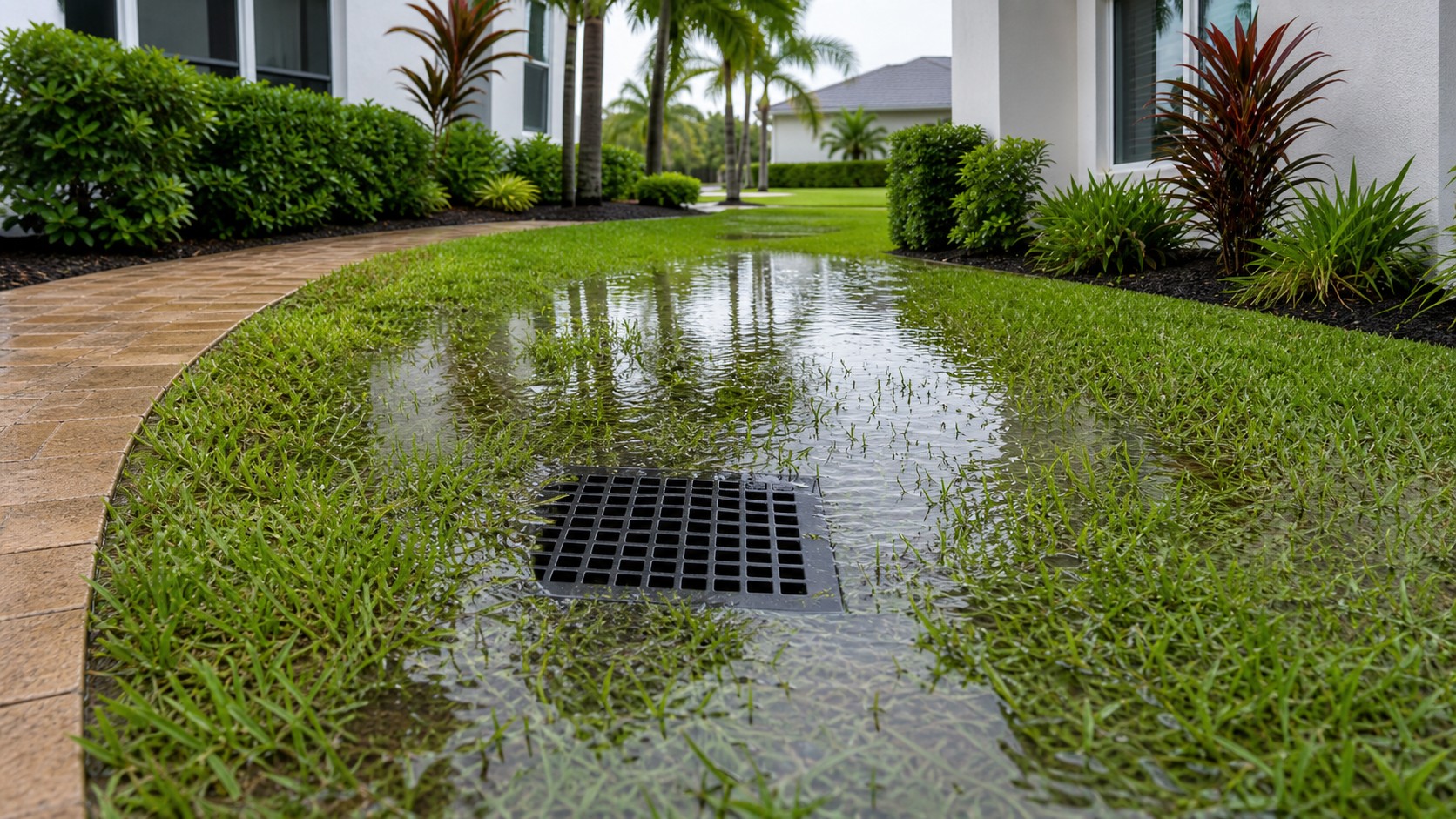
Note whether water disappears within hours, remains overnight, or stays for several days. The timing helps separate normal storm response from a repeating drainage problem.
Look for roof runoff, downspouts, driveway slope, patio edges, irrigation, low turf, swales, nearby inlets, or runoff from a neighboring hardscape.
If water appears tied to swales, culverts, catch basins, canals, or right-of-way drainage, the City stormwater or 311 path may be the better first step.
Take photos after the rain, mark the wet area, note the date and approximate duration, and describe nearby downspouts, drains, sidewalks, driveways, and landscaping.
Local reference points
These industry and public references help organize visible property conditions and separate private yard drainage questions from stormwater, right-of-way, utility-marking, and seasonal rainfall context.
Questions
No. Some water problems are private yard issues, while others involve public stormwater infrastructure, swales, culverts, catch basins, or floodplain constraints.
Record where water collects, how deep it appears, how long it remains, what rain event caused it, and whether nearby drains, swales, downspouts, or hardscape affect the area.
Related services
Related resources
Next step