Start with the property boundary
Roof runoff, irrigation, patio or driveway slope, low turf, and privately installed drains are usually property-specific observations. Water tied to a street, public catch basin, roadside swale, culvert, canal-control feature, or right-of-way may need the City reporting path first.
Recognize public stormwater signs
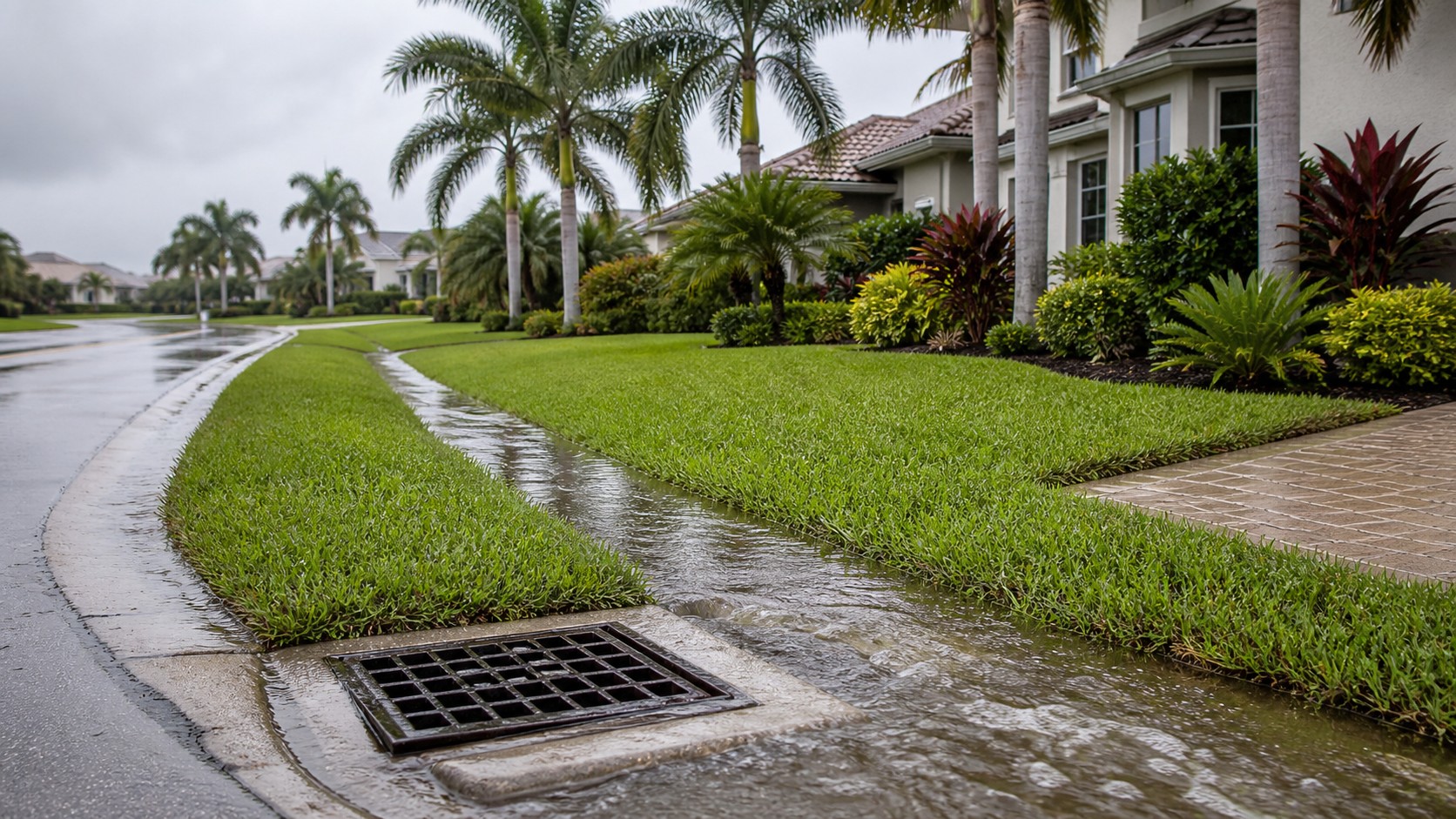
Street flooding, damaged public drainage features, a blocked public catch basin, water backing up at a driveway culvert, or repeated right-of-way flooding should be documented without altering the feature. Cape Coral residents can use the City 311 channel for public stormwater concerns.
Treat swales and culverts as connected infrastructure
Roadside swales, driveway culverts, public catch basins, and drainage pipes can work together as part of the stormwater system. Filling, blocking, deepening, piping, or redirecting them can affect neighboring properties and downstream drainage.
Check grading, fill, and permit questions
Cape Coral flood-protection guidance says to check before building, altering, regrading, or depositing fill because site changes can affect drainage. Ask whether the exact scope touches right-of-way, changes grade, or needs City, permit, licensed-contractor, surveying, or engineering review.
Capture evidence before reporting
Record the location, date, rain conditions, how long water remains, whether it reaches a street or swale, and wide and close photos of nearby drains, culverts, inlets, hardscape, and downspouts. Do not enter moving water, open structures, traffic areas, or unsafe flooded locations to take a photo.
Know when private drainage is still relevant
A private provider may be the next conversation when the source is within the lot, such as roof runoff, hardscape flow, low turf, irrigation, or a private drain. The provider still needs to explain the source, collection point, route, outlet, maintenance access, and public-boundary limits.