Check roof runoff first
Side yards often receive concentrated downspout or roof-valley runoff. Note whether the wet area starts near a gutter outlet, splash block, or buried line.
 Cape Coral Drainage GuideCape Coral yard drainage requests
Cape Coral drainage education
A soggy side yard can come from roof runoff, tight access, low slope, compacted soil, irrigation, hardscape edges, or limited outlet options. The right drainage conversation starts with where water enters and where it can go.
Cape Coral drainage requests. Tell us where water collects, what appears to feed it, and how you prefer to be contacted. We review every request and follow up with clear next steps.
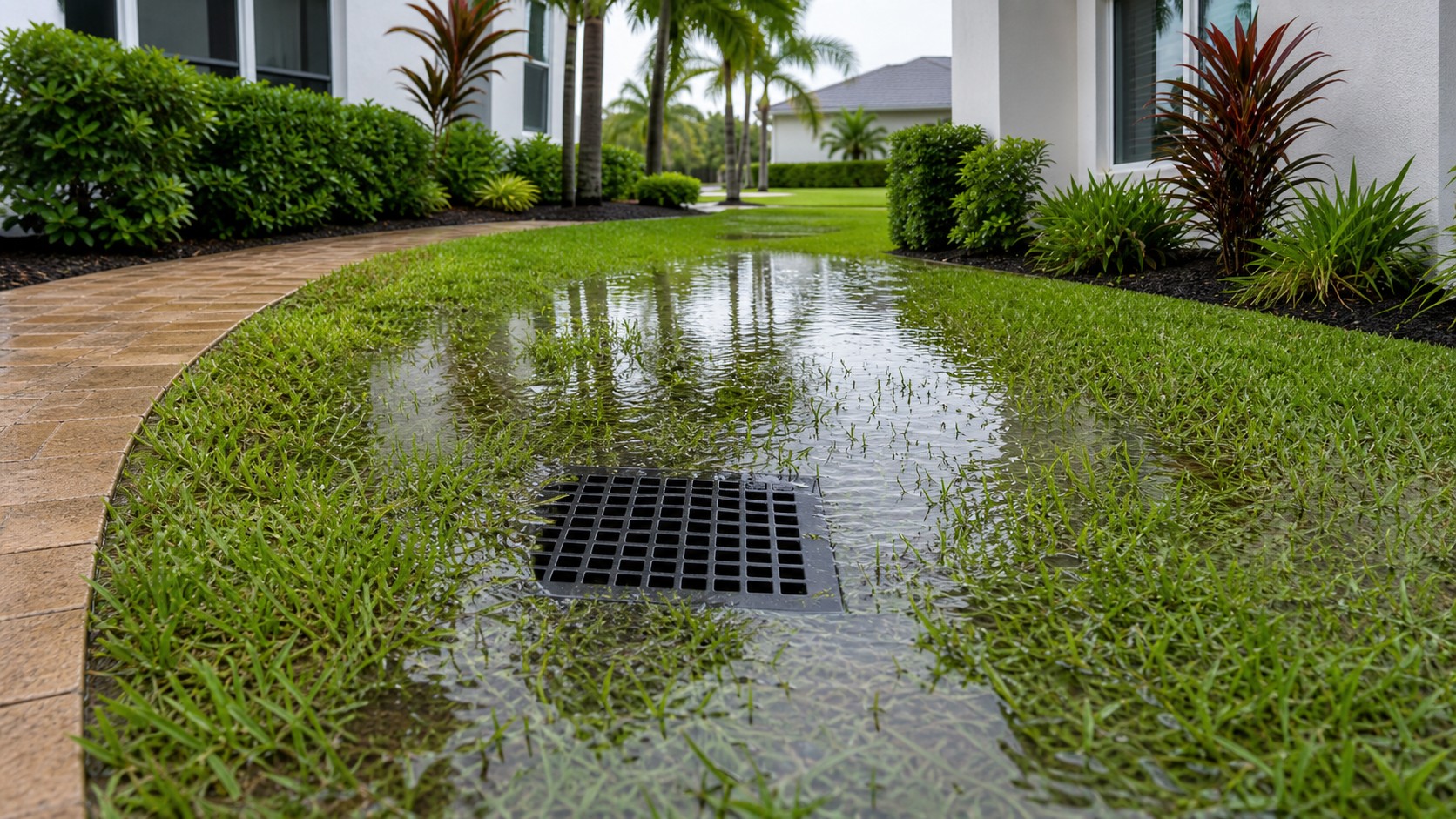
Side yards often receive concentrated downspout or roof-valley runoff. Note whether the wet area starts near a gutter outlet, splash block, or buried line.
Fences, gates, AC pads, utilities, irrigation, roots, pavers, and narrow side yards can affect whether French drains, buried downspout lines, catch basins, or grading are practical.
A side-yard drainage system still needs an appropriate discharge path. Limited slope or public swale/right-of-way constraints can change the options.
Record whether the area stays wet after normal rain, heavy rain, irrigation cycles, or only during rainy-season storms.
Local reference points
These industry and public references help organize visible property conditions and separate private yard drainage questions from stormwater, right-of-way, utility-marking, and seasonal rainfall context.
Questions
No. A French drain may fit some side yards, but roof runoff routing, grading, surface drains, irrigation repair, or stormwater reporting may be more appropriate depending on the source and outlet.
Take one wide photo, one close wet-area photo, photos of downspouts and hardscape edges, and a route/outlet photo showing where water could reasonably go.
Related services
Related resources
Next step