Separate containers from yard drainage
Buckets, planters, tires, tarps, clogged gutters, and small containers are different from yard low spots, swales, patios, or drainage lines.
 Cape Coral Drainage GuideCape Coral yard drainage requests
Cape Coral drainage education
Recurring standing water can create nuisance yard conditions and may raise mosquito concerns. Drainage planning should still start with the water source, duration, and outlet.
Cape Coral drainage requests. Tell us where water collects, what appears to feed it, and how you prefer to be contacted. We review every request and follow up with clear next steps.
Buckets, planters, tires, tarps, clogged gutters, and small containers are different from yard low spots, swales, patios, or drainage lines.
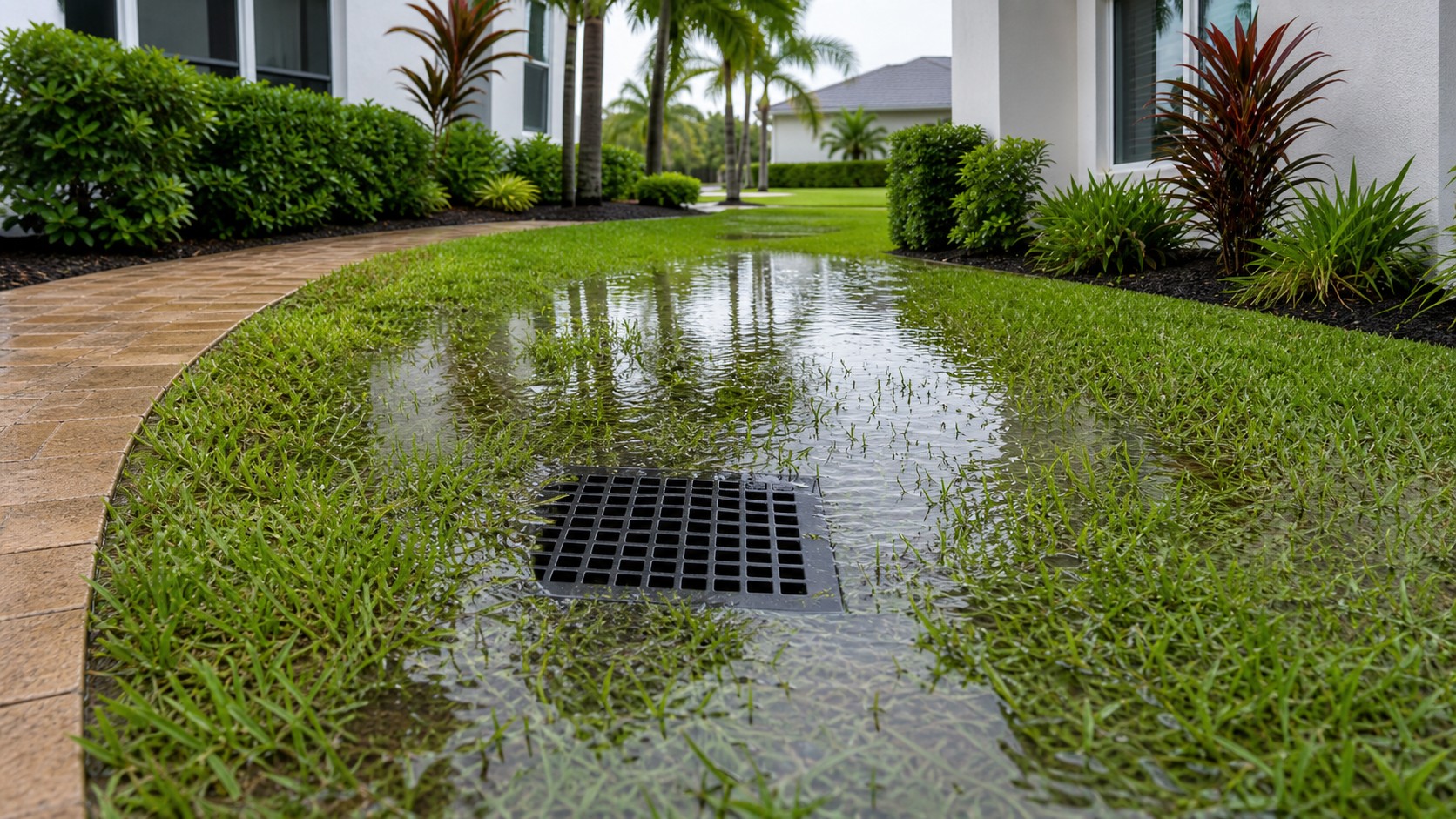
A puddle that disappears quickly after a storm is different from water that remains in the same low area for days.
Leaves, sediment, mulch, clogged grates, blocked outlets, and hardscape edges can keep water from moving even when a drain or swale exists.
Private yard drainage, public stormwater issues, and mosquito-control concerns may require different next steps depending on where water is sitting and why.
Local reference points
These industry and public references help organize visible property conditions and separate private yard drainage questions from stormwater, right-of-way, utility-marking, and seasonal rainfall context.
Questions
No. The site still needs review of source, slope, outlet, access, maintenance, and whether the water is private yard drainage or public stormwater.
Record where water sits, how long it remains, whether it is in a container or low yard area, nearby downspouts or drains, and photos after rain.
Related services
Related resources
Next step